


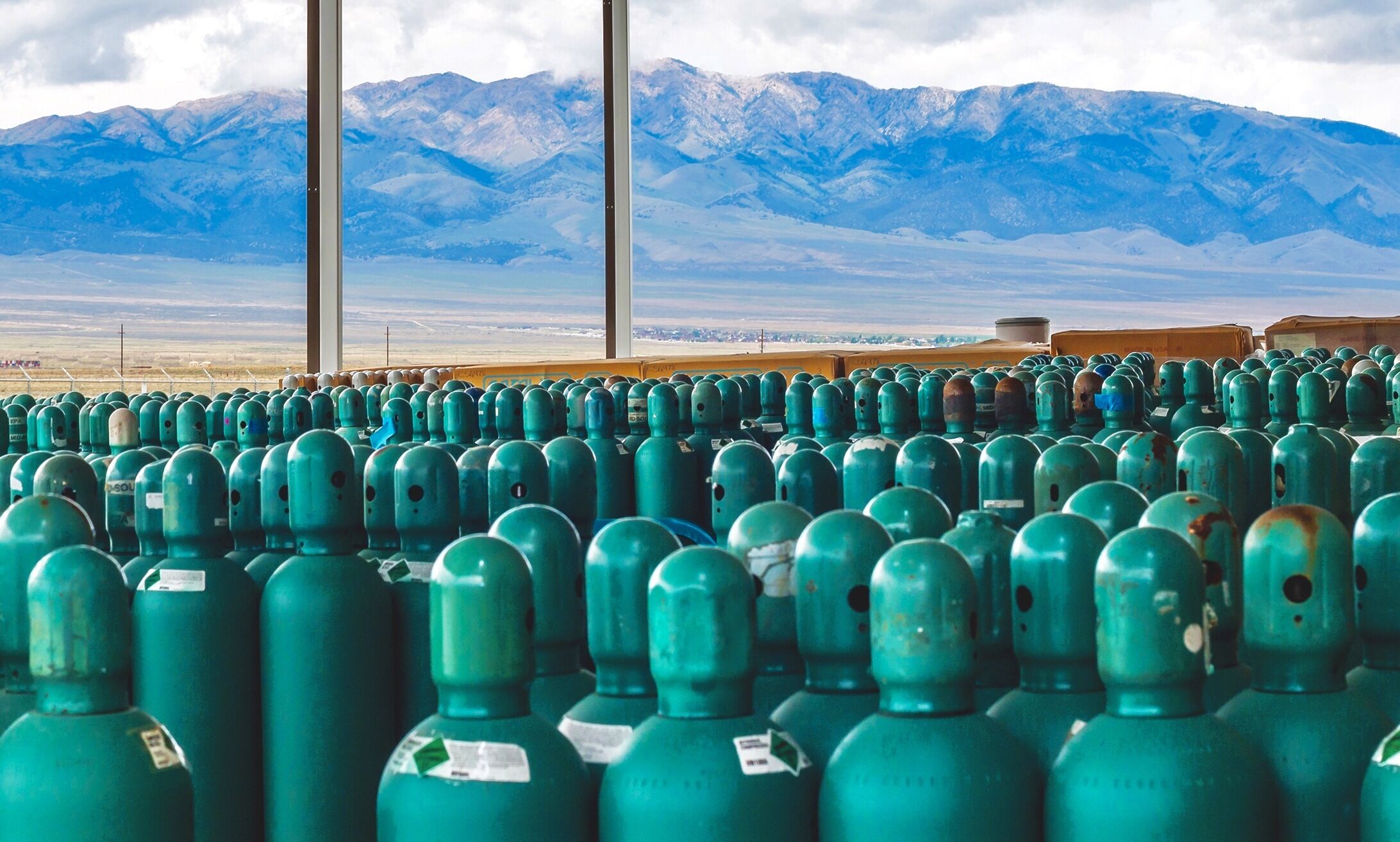
PureAire Monitoring Systems manufactures a variety of safety gas monitors, including the Air Check Oxygen Monitor. Oxygen monitors are commonly installed in areas containing liquid nitrogen, cryogenic gas cylinders, or areas with gas lines.
Nitrogen gas is used in many industries ranging from medical and sciences to cryotherapy, or nitrogen used in a popularized dessert, ice cream. Other common locations using liquid nitrogen are laboratories, semiconductors, cleanrooms, cryogenic freezers, research universities, NMR (Nuclear Magnetic Resonance), and confined spaces.
For decades oxygen monitors were most commonly used in confined spaces, most notably, the portable oxygen monitor for workers to wear on their clothing. With a growing demand for nitrogen and cryogenics comes the rising need for safety professionals to help implement safety measures protecting people in the workplace.
Fire Marshal’s, EH&S departments, and safety officers require the use of oxygen monitors in confined spaces, and by law in some cities where locations are using tanks weighing over 100 lbs.
PureAire works with Gas Distributors
PureAire has relationships with gas distributors, including Praxair, Air Liquide, Airgas, and Air products. With the help of gas distributors, and knowledge of inert gas safety, they help work to provide an oxygen sensor when needed. PureAire’s oxygen sensors are a longer-lasting alternative to other oxygen gas monitors being installed, using electrochemical sensors. PureAire’s zirconia technology based sensors use a 10+ year sensor.
Types of Oxygen Monitors available?

PureAire O2 Deficiency Monitor
PureAire’s ceramic ziroconia sensors also have infrequent calibration, and no sensor replacement required as they are designed for longevity. PureAire’s sensor range are capable of reading oxygen levels in %, most commonly, 0-25% for breathing safety, and offered ranges in 0-1000ppm for low level analytical accuracy. Oxygen analyzers are used in the growing industry for 3D printers, in the building process using metal powder for additive manufacturing, nitrogen gas or argon helps reduce corrosion, oxidation, and inhibits combustion.
Some questions to think about when comparing PureAire to other O2 monitors
1. How often do you calibrate a sensor? PureAire- No Calibration
2. How often do you replace a sensor? PureAire- No replacement sensors. Most electrochemical sensors last 1-2 years
3. How much does a sensor cost? PureAire- $250 if needed, but unlikely will never have a need. Average cost $250-500.
4. How long is the wait time to get a replacement sensor? PureAire- 1 to 2 days. Average
5. What is the shelf life of a sensor? PureAire-Unlimited.
6. What happens if you do not calibrate a sensor? PureAire-Very stable. Most electrochemical sensors will false alarm.
If you’re looking for an oxygen monitor that’s low maintenance, accurate, and easy to use, consider PureAire. Visit www.pureairemonitoring.com to learn more.


