

Air Separation Plants and the Use of Oxygen Monitors
- By : PureAire Monitoring Systems
- Posted on : May 19, 2016
- News Room
Air separation plants are critical for many different industries, from clean energy to manufacturing. Nowadays, cryogenic is the most common type of distillation used to separate air into its component gases – nitrogen, oxygen, and inert gases including helium and argon. If your industry relies on air separation for product development or manufacturing, then knowing how the process works is an important part of operational safety. Learn about air separation plant operation and safety protocol to be informed.
How Air Separation Plants Work
In the cryogenic air separation process, air is chilled to the liquid stage. At this point, nitrogen and oxygen can be separated out from the inert gases in the air. Each compound can then be distilled at boiling temperature, thereby returning the liquid to a vapor state. The resulting nitrogen and oxygen gases are highly pure.
To get the air ready to be separated, plant employees first filter the air to remove particles, such as dust. Next, the air is pressurized and then filtered up to several times to remove carbon dioxide, which can freeze the distilling equipment.
Using a still and heat exchanger, workers heat and cool the gas, turning it into a highly pure liquid. The oxygen liquefies and falls to the bottom, while the highly pure nitrogen gas floats above the oxygen since it is lighter.
Once separated, the gases can be kept in gaseous state or returned to a liquid state via chilling. Many air separation plants have elaborate pipe systems, whereby the oxygen or nitrogen gas can be transported directly to production lines.
Air separation plants have many diverse uses. Pure oxygen gas is a basic component of metalwork including steel manufacturing. Nitrogen gas helps preserve edible oils from oxidizing and is used as a safeguard against combustion in shipping and cargo transit.
The cryogenic process is effective and efficient at separating air; however, it does pose some safety risks. Air is safe to breathe when nitrogen and oxygen are together in the appropriate ratio. As nitrogen and oxygen are separated two distinct hazards emerge.
Pure oxygen increases the fire danger in an environment. If not controlled, this could turn dangerous.
Pure nitrogen depletes oxygen and can cause death via asphyxiation. Since nitrogen is colorless and odorless, workers may not know if the distilled nitrogen has escaped the still and infiltrated the environment. Argon acts in a similar manner, yet is a less common hazard since it is present in trace levels in oxygen.
Without a safeguard of an oxygen monitor, staff may be exposed to toxic gases. In a worst-case scenario, staff could die.
How an Oxygen Monitor Protects Staff
Between 1992 and 2002, 80 workers died from nitrogen exposure. Workers may fall unconscious after even a single breath of oxygen deficient air. If individuals do not receive oxygen in a matter of minutes, the consequences are grave.
Educating staff about the dangers of these gases is a first step toward operational safety. Installing an oxygen or O2 monitor is the next step to keeping everyone safe.
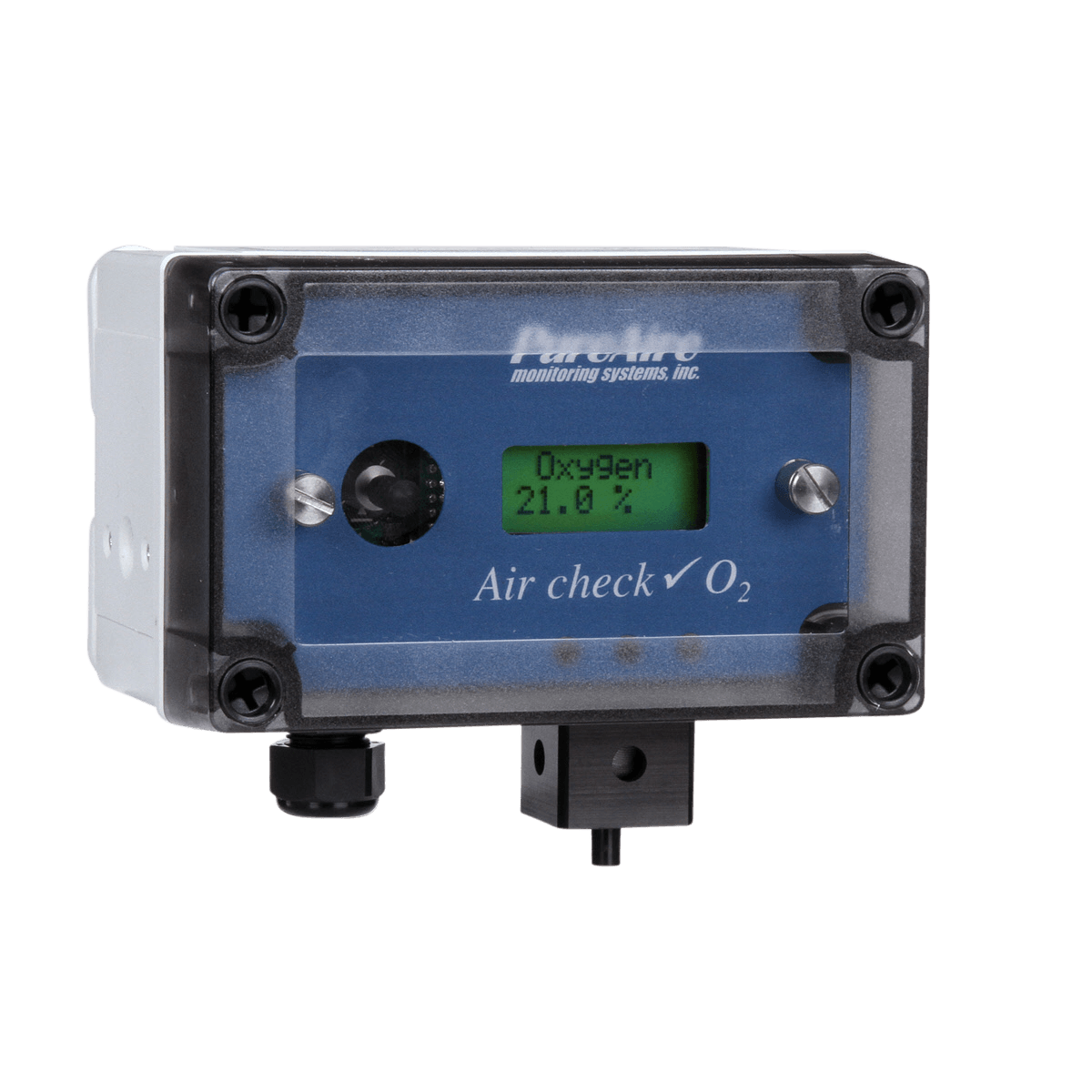
An O2 monitor measures the levels of oxygen in the air at any given time. The device takes sample readings of the air and remains silent as long as there is sufficient oxygen in the environment. Since argon and nitrogen deplete oxygen, the level of oxygen in the room will decrease if a gas leak occurs. When oxygen levels fall below the minimum safety level, the O2 detector will sound an alarm. Trained staff will then know to evacuate the premises until emergency assistance arrives.
Oxygen deficiency monitors from PureAire are guaranteed to perform for 10 years. These oxygen deficiency monitors have a zirconium oxide sensor, which accurately measures air oxygen levels in temperatures as low as -40 Celsius. The O2 monitor from PureAire is an efficient, cost-effective way for plants using nitrogen, helium, or argon to keep staff safe from the known health hazards of these gases.