

Are you using the right monitor for CO2?
- By : PureAire Monitoring Systems
- Posted on : July 14, 2012
- News Room
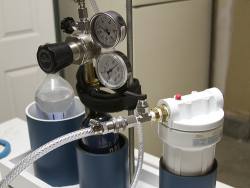
Carbon dioxide, (CO2) detectors are commonly used to protect workers from leaks in fast food establishments and restaurants. The OSHA, ACGIH and NIOSH CO2 threshold limit value for 8 hours, (TLV) is 5,000 PPM, and the ACGIH and NIOSH short-term exposure level, (STEL) is 30,000 PPM. Although these agencies established worker exposure levels, they also all state:
“ The health effects of Carbon dioxide is a simple asphyxiant (HE17).” 1
Workers have been seriously injured due to exposure to oxygen deficiency in fast food facilities due to faulty or non-responsive CO2 monitors.
It is fact that a carbon dioxide leak from a faulty beverage dispensing system in a work environment displaces oxygen. The real health hazard is not from exposure to CO2, it’s from a lack of oxygen. “Carbon dioxide gas is an asphyxiant with effects due to lack of oxygen.” 2
“Inhaling large concentrations causes rapid circulatory insufficiency leading to coma and death. Asphyxiation is likely to occur before the effects of carbon dioxide overexposure.” 3
Virtually every publication and article written about CO2 exposure indicate that the real risk to life and health is from a lack of oxygen. CO2 monitors can not detect oxygen deficiency so why do fast food establishments and restaurants rely on them for protecting their workers when the real risks are from a lack of oxygen?
PureAire manufactures an Oxygen monitor designed to instantly detect the smallest changes in oxygen levels as a result of a CO2 leak. The earth is a wonderful source of calibrated oxygen and unlike CO2 monitors that read 0% even when the oxygen level is lower, PureAire reads continuously monitors the actual oxygen level 24-7. It’s designed to instantly alarm to hazardous levels caused by a CO2 leak.
PureAire’s oxygen monitor uses a 10+ year no maintenance no calibration sensor. All monitoring system functions are 100% supervised and fault protected. Workers are always assured of continuous protection from oxygen deficient environments from leaking CO2 and alerted in the event of a failure. In addition the oxygen monitor has built-in alarm relays for controlling automated ventilation fans or connecting to standard fire alarm panels.
It’s proven that a CO2 leak causes asphyxiation well before the effects of overexposure, and CO2 monitors can not be used to detect lower oxygen levels, then it’s clear that companies are using the wrong monitor!
A major producer of CO2 gas actually uses PureAire oxygen monitors in their gas processing plants because of their concern of lower oxygen levels due to CO2 releases. We agree with them.
1. United States Department of Labor, Occupational Safety & Health Organization, CO2, Chemical Sampling Information, Carbon dioxide. Revision date 9/20/2001
2. Praxair Material Safety Data Sheet, Product: Carbon Dioxide P-4574-J Date: July 2007
3. BOC Gases, Material Safety Data Sheet, MSDS: G-8 Revised: 6/7/96