

CO2 Monitor For Breweries
- By : PureAire Monitoring Systems
- Posted on : November 12, 2015
- News Room
CO2 Monitor For Breweries: Carbon Dioxide Safety and How to Stay Safe
Carbon dioxide is a necessary byproduct of the brewing process, yet too much CO2 can be dangerous to employee health. In Germany, two workers died at the same brewery in 2012 due to hazardous levels of CO2 present in beer mixing and pressure tanks. Learn more about how CO2 levels can get out of control during the beer brewing process and ways to protect your staff from this deadly gas.
Carbon Dioxide in Brewing
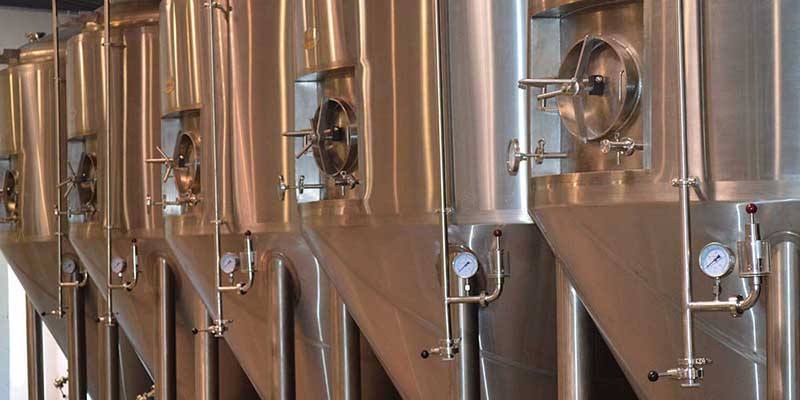
As beer ferments in stainless steel fermentation tanks, the yeast that was pitched into the wort eats up the natural sugars (glucose) over the course of 14 days or more. Lagers have a longer fermentation period of up to 6 weeks. During this time, the beer is held in a pressurized tank and kept at a constant temperature. As the yeast consumes the sugars, it creates carbon dioxide gas and ethyl alcohol. The alcohol-free wort then becomes both carbonated and alcoholic, essentially turning into beer as we know it.
Some carbon dioxide gas escapes the fermenter through an airlock during the initial fermentation period. However, as the beer finishes fermentation and reaches its final specific gravity (a measure of alcohol by volume), the airlock is capped and CO2 is then allowed to build up inside the tank. This ensures that beer becomes carbonated and develops the fizzy mouth feel you’ve come to associate with beer. Additional carbon dioxide can be added to the beer as needed to control the end result and ensure consistency in commercial brewing.
Hazards of Carbon Dioxide
While carbon dioxide is crucial to the taste and feel of beer, it is also highly dangerous. CO2 displaces oxygen, which can lead to asphyxiation if the oxygen deficiency is not corrected. CO2 can also be highly toxic, even at levels as low as 0.5%. Exposure to more than 10% by volume of carbon dioxide can cause death within minutes. By the time a fellow staff member realizes that a colleague is non-responsive or has been overcome by exposure, the damage is done.
Brewers must control their exposure to CO2 through all aspects of the beer brewing process, from fermentation to packaging and bottling. CO2 is heavier than air, so it will settle to the bottom of fermentation tanks. The gas can then escape from fermentation tanks and hide on the brewery floor, in invisible and dangerous pockets of air.
Since carbon dioxide gas is odorless and colorless, brewery workers may not know when they are being exposed to dangerous levels of CO2 until it’s too late. Even if staff are trained in the best practices regarding carbon dioxide in the environment, they cannot protect themselves from something they cannot see or smell.
To keep staff safe, it’s a smart idea to monitor levels of carbon dioxide in the air. A dual-use oxygen/carbon dioxide sensor can monitor existing levels of CO2 and alert staff if the amount of CO2 start to rise. This monitor can also track the level of oxygen, sounding an alarm if oxygen levels fall to a point where staff do not have enough oxygen to breathe.
When levels of CO2 reach the point that can be hazardous to health or exceed the minimum exposure risk, or when the amount of oxygen in the air becomes too low, visual and auditory alarms go of that alert all staff on the brewery floor to the dangers. Staff can then evacuate the premises safely.
These monitors take readings of the levels of O2 and CO2 in the environment at all times. If levels become too high, brewery staff can remove carbon dioxide from the environment by using the ring main or manually removing the CO2.
PureAire offers a dual O2/CO2 monitor that has a zirconium sensor, which is uniquely equipped to perform in humid environments where temperatures fluctuate. The same Co2 detector can last for up to 10 years, and will not require significant maintenance or calibration to remain accurate. Compared to other brewery CO2 monitor offerings, PureAire’s are accurate, durable, reliable, and easy to use.
As a leading expert in the area of carbon dioxide monitoring, PureAire has more than 15 years of experience creating durable oxygen deficiency monitors. Learn more about the PureAire Oxygen Monitoring System by emailing info@pureaire.net or visiting the business website, www.pureairemonitoring.com.
Source
http://science.howstuffworks.com/innovation/edible-innovations/beer4.htm