


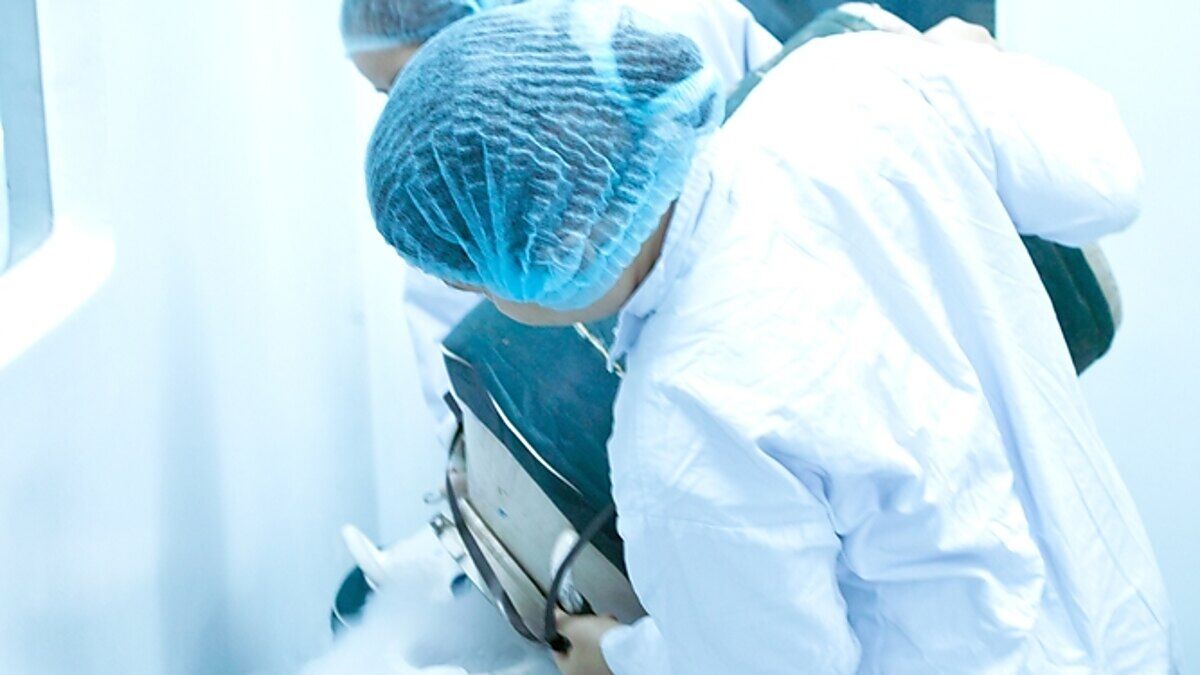
A liquid nitrogen dewar, a CO2 tank, or an argon line can turn a normal workroom into an oxygen-deficient space without changing how it looks or smells. People inside may only notice they feel foggy, clumsy, or short of breath after the air has already dropped below a safe level.
If your facility stores or uses nitrogen, argon, helium, or carbon dioxide, that hazard may already exist. An oxygen deficiency monitor warns you before a leak becomes deadly.
When Do You Need an Oxygen Deficiency Monitor?
You need an oxygen deficiency monitor when an inert or cryogenic gas can leak into a space where people work or pass through, such as a lab, walk-in freezer, filling room, storage area, or any enclosed or poorly ventilated room.
A vital question worth exploring:
If a cylinder, dewar, tank, or process line leaked in an occupied area, would employees know the oxygen level was dropping before they felt the effects?
If the answer is no, consider adding an oxygen monitoring system. The risk can be found in a laboratory, pharmaceutical plant, food and beverage facility, 3D-printing operation, healthcare facility, or cryogenic storage area. The pattern is the same: oxygen-displacing gas, an enclosed space, and people who need an early warning.
How Does an Oxygen Deficiency Monitor Work?
An oxygen deficiency monitor is a wall-mounted device that continuously measures oxygen in the surrounding air and triggers alarms when the level falls too low.
Normal air is about 20.9% oxygen. OSHA defines anything below 19.5% by volume as oxygen-deficient and, under respiratory-protection rules, generally immediately dangerous to life or health.
The monitor does not directly measure nitrogen, argon, helium, or CO2. It measures their effect on oxygen levels. As oxygen levels drop, the monitor can trigger horns, flashing lights, and ventilation.
How Inert Gases Deplete Oxygen

Nitrogen, argon, helium, and carbon dioxide are colorless and odorless. A leak lowers the share of oxygen in every breath. Where the gas collects depends on density, airflow, and layout. Ventilation helps, but it does not guarantee that the air is safe.
Why Early Warning Matters
Investigators have documented deaths in which nitrogen displaced oxygen, and people had little useful warning.
Gainesville, Georgia — January 28, 2021
A liquid nitrogen release at the Foundation Food Group plant filled a freezer room with an oxygen-deficient cloud. Six workers died of asphyxiation; three other employees and a firefighter were seriously injured. The CSB later found the plant had not installed atmospheric monitoring and alarms that could have warned people the room was unsafe. Read the CSB final report.
White, Georgia — May 2025
A worker died after nitrogen created an oxygen-deficient atmosphere at a solar manufacturing site. OSHA cited the on-site contractor for failing to protect employees from nitrogen asphyxiation and for failing to train workers in oxygen-deficient atmospheres. See the U.S. Department of Labor news release.
Using nitrogen, argon, helium, or CO2 on site?
Tell us the gases and the room layout. We will specify an oxygen deficiency monitor for that space.
What Low Oxygen Does to the Body
Hypoxia occurs when too little oxygen reaches the brain and tissues. Early effects can keep someone from recognizing the danger and from leaving the area safely.
- Reduced mental alertness
- Impaired coordination
- Poor decision-making
- Difficulty breathing
- Rapid heartbeat
- Fatigue
- Changes in vision
If oxygen levels keep falling, it can lead to unconsciousness, coma, and death in extreme cases.

Why the Sensor Type Matters
Two common sensor technologies used for oxygen deficiency monitoring are electrochemical and zirconium oxide sensor cells. The monitors’ displays may look similar, but the replacement cycle, long-term cost, and reliability do not.
Electrochemical sensors react chemically with oxygen and convert that current into a percent reading. They work, but the cell depletes over time and can drift with pressure, temperature, or humidity, so it usually needs replacement every 12 to 24 months.
Zirconium oxide sensors use yttria-stabilized zirconia (YSZ). At about 450°C, the ceramic conducts oxygen ions, and the current tracks oxygen concentration. These sensors do not deplete. They typically last 10+ years and hold accuracy through environmental swings, which cuts replacement and maintenance costs.
Where to Install a Monitor
Mount the monitor where a gas leak is likely, or where gas may collect near dewars, bulk tanks, gas cabinets, and process lines feeding an occupied room. Consider airflow, whether the gas is lighter or heavier than air, and where people stand or enter. Follow the manufacturer’s instructions and applicable codes.
A small room may need one point. A large or divided space may need several.
Ask the PureAire team to review placement and advise on coverage.
OSHA Standards to Take Seriously
OSHA defines an atmosphere below 19.5% oxygen by volume as oxygen-deficient (see 29 CFR 1910.146). For permit-required confined spaces, employers must test or monitor as needed to maintain acceptable entry conditions. See 1910.146(d)(5)(ii) and Appendix B on atmospheric testing order.
Outside a permit space, base the monitoring plan on the hazard assessment and the codes that apply to that site.
Frequently Asked Questions
Does the monitor detect nitrogen, argon, helium, or CO2?
No. It measures oxygen. When those gases displace O2, the reading drops and the alarm trips. If you also need direct CO2 measurement for beverage stations, incubators, or areas using dry ice, among others, use PureAire’s Dual O2/CO2 Monitor.
What differentiates a fixed monitor from a handheld monitor?
A handheld unit only reads when someone is holding it. A fixed monitor continuously measures O2 levels in the room and can activate alarms even when the space is empty.
PureAire Oxygen Deficiency Monitors
PureAire monitors use a non-depleting zirconium oxide sensor that lasts 10+ years in normal service, with a clear live readout, 24/7 tracking, audible and visual alarms at a programmed low-oxygen threshold, and accuracy down to –40°C.
See PureAire’s line of Oxygen Deficiency Monitors.
Protecting People Before Low Oxygen Becomes an Emergency
If inert gas can enter an occupied space, the warning cannot wait until someone feels physically off. Let us know the gases, room layout, and alarm needs, and we will specify the monitor and accessories.
Read our other related posts: Helium Leaks Can Kill: Why Every MRI Facility Needs Oxygen Deficiency Monitors, Protecting Against Oxygen Deficiency Risk, and Cryotherapy – Baby It’s Cold Inside.


