

How Many O2 Monitors Do I Need? Installation Height and More.
- By : PureAire Monitoring Systems
- Posted on : February 04, 2019
- News Room
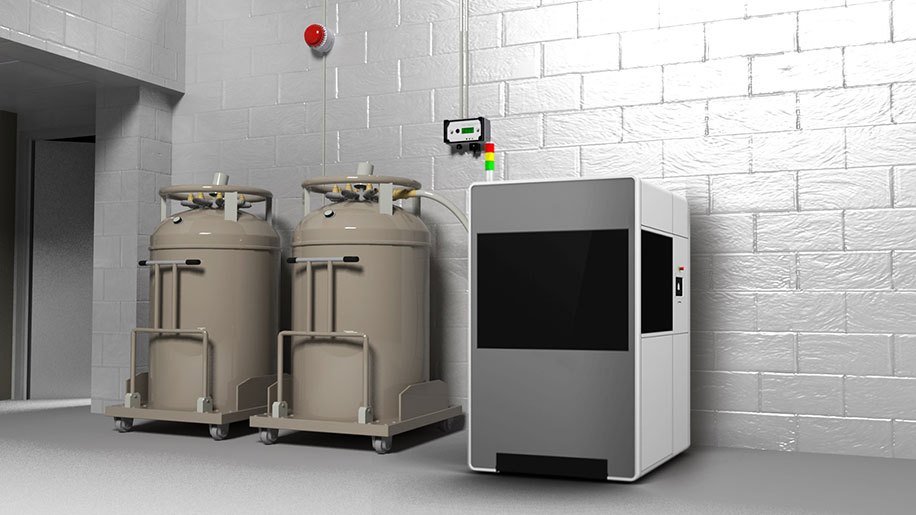
While OSHA regulations require the use of an oxygen monitor anywhere that compressed gases or cryogenic liquids are used or stored indoors, the regulation does not provide sufficient detail for facilities on how to set up an oxygen monitor. Businesses want to comply with the regulations but are left wondering what compliance looks like. At PureAire, we’re often asked by our customers, “how many oxygen sensors should be installed?” so we thought we’d provide clarification on where and how to mount oxygen monitors.
Where an Oxygen Deficiency Monitor Should be Used
OSHA regulations require that oxygen deficiency monitors be placed in any room where compressed gases are used or stored. Storage areas are frequently outside or in confined spaces, such as basements or storage closets.
When gas tanks are installed outside and the gas enters the facility by pipes, we recommend oxygen deficiency monitors be installed near the main gas connections, which is where the gas enters the facility. This might be near a machine, a food and beverage packaging dispensing machine, a 3D printer, or other tools.
With respect to a confined space where dewars of gas are kept, the oxygen deficiency monitor should be installed directly in the storage area. PureAire’s oxygen monitors are designed to function optimally in confined spaces, including cryogenic freezers, and are impervious to shifts in barometric pressure. As such, they take accurate readouts of oxygen levels in confined spaces, freezers, facilities, and other places.
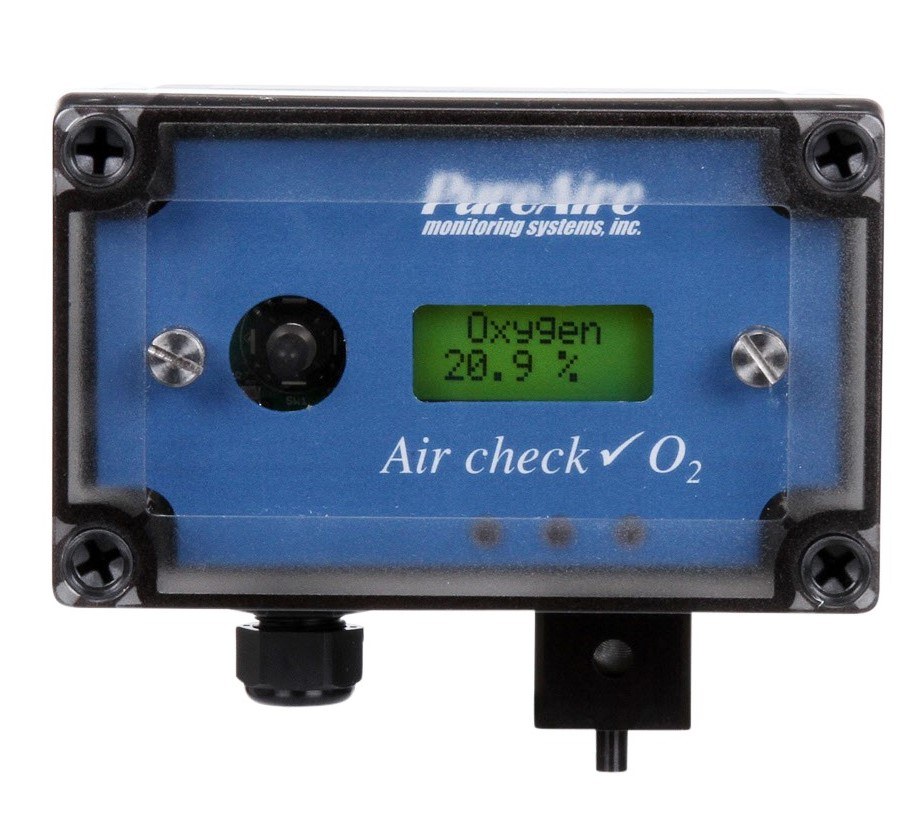
The oxygen monitors measure 5.12 inches wide by 4.5 inches high by 3.25 inches deep, and their small size means that they’re quite easy to place about the facility, even if you need to place the O2 monitor in a tightly confined space, such as a cryogenic freezer.
Best Place to Mount an Oxygen Deficiency Monitor
The best practice is to mount the oxygen deficiency monitor 3 to 5 feet off the ground, as well as 3 to 5 feet away from a gas cylinder.
There are situations when the oxygen monitor should be placed further away. One common example is MRI rooms, where metal is prohibited due to the strength of the MRI magnet. In these circumstances, the oxygen deficiency monitor can be mounted outside of the room, and a plastic sample draw tube used to check oxygen levels inside the MRI room.
What is the Proper Spacing of Oxygen Monitors?
This last question may be the trickiest question to answer. Nitrogen and other inert gases have no odor or color, so they cannot be seen. The difficulty here is that it’s all but impossible to say where the gas will go if there is a leak.
We recommend that you place one oxygen deficiency monitor every 400 to 600 square feet to be safe. This works out to every 20 to 30 feet in a large space. When you use this ratio to determine the right number and spacing of oxygen monitors for your facility, you’ll be adequately covered just in case anything happens. Given the deadly consequences of a nitrogen leak, it’s better to be safe than sorry.
PureAire creates oxygen deficiency monitors that are capable of withstanding some of the toughest conditions. Oxygen deficiency monitors from PureAire are designed to operate in temperatures from as low as -40°C up to 55° C.
Oxygen deficiency monitors can last for 10 or more years with no calibration. The hardy zirconium sensor needs no calibration after installation, which means that setup couldn’t be easier.
PureAire’s monitors are accurate to +/- 1 percent and come with two alarm levels, 18 percent, and 19.5 percent. The integrated alarms provide sufficient notification for workers to evacuate the area. The LCD display is backlit so it’s easy to read.
All PureAire O2 monitors come with a 3-year warranty. Wall mounting brackets and an optional plug-in wall power supply are included, so you can mount the unit upon receipt and protect your facility from dangerous gas leaks.
To learn more about PureAire’s oxygen deficiency monitors, visit www.pureairemonitoring.com.