

New requirements for safe use and storage of liquid nitrogen and dry ice
- By : PureAire Monitoring Systems
- Posted on : April 20, 2019
- News Room
The College of American Pathologists (“CAP”) recently imposed new requirements to address risks related to the use and storage of liquid nitrogen (“LN2”) and dry ice.
Background
The new requirements come after a deadly incident in 2017, when liquid nitrogen leaked at a Georgia lab that was not accredited through CAP. Emergency responders were called to the scene when an employee suffered burns and, moreover, lost consciousness from oxygen deprivation caused by the leak. While the employee eventually recovered from her injuries, one of the first responders died of asphyxiation as a result of the nitrogen leak.
That unfortunate incident illustrates the dangers of nitrogen leaks, which are inherent in the storage and use of LN2. Indeed, there are several cases reported nearly every year of laboratory personnel who die of asphyxiation caused by exposure to nitrogen gas.
Asphyxiation risk is present in dry ice usage as well since, if it is stored in areas without proper ventilation, dry ice can replace oxygen with carbon dioxide, potentially causing workers to rapidly lose consciousness.
CAP’s New Regulations
Despite their safety risks, both dry ice and LN2 have many beneficial uses in commercial and lab settings, including hospital and research facilities. As such, CAP’s new focus on utilizing best practices to increase employee safety and reduce the danger of nitrogen leaks is vitally important.
Before the regulations were changed, lab directors had greater personal discretion in selecting the types and deployment of safety equipment utilized in their facilities. Now, laboratories are required to place oxygen(“O2”) monitors at human height breathing levels anywhere liquid nitrogen is used or stored, and they must place signage warning of safety risk regarding, and train all affected employees on safe handling of, LN2 and dry ice.
Pathologists understand that oxygen/carbon dioxide monitors must be placed appropriately anywhere dry ice or LN2 are used or stored. Even a couple tanks of liquid nitrogen kept in a supply closet pose a safety risk, because even a small leak can quickly displace a large amount of oxygen.
Oxygen Monitors Protect Laboratory Workers
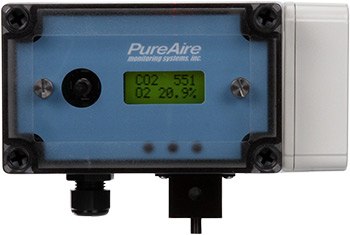
While many people realize that the use and storage of liquid nitrogen and dry ice can present health risks, they may fail to grasp the speed at which circumstances can become dangerous. It takes only a few breaths of oxygen-deficient air for one to lose consciousness.
AS CAP recognized, oxygen and carbon dioxide monitors offer an effective solution to the health and safety risks posed by nitrogen leaks and inadequate dry ice storage. O2/CO2 monitors continually monitor the air, and they will remain silent so long as oxygen and carbon dioxide remain within normal levels. However, in the event that oxygen is depleted to an unsafe level (19.5%, as established by OSHA), or carbon dioxide levels rise to an unsafe level, alarms embedded in the monitors will sound, alerting employees to evacuate the area and summon assistance from qualified responders.
PureAireMonitors 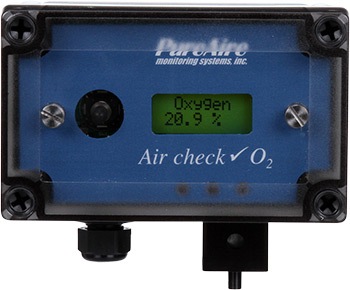
PureAire Monitoring Systems’ line of oxygen and dual oxygen/carbon dioxide monitors offer thorough air monitoring, with no time-consuming maintenance or calibration required., The monitors function well in confined spaces, such as closets, basements, and other cramped quarters. PureAire’s monitors can handle temperatures as low as -40 C, making them ideally suited for environments, such as laboratories, that utilize liquid nitrogen or dry ice. A screen displays current oxygen levels for at-a-glance reading by employees, who derive peace of mind from the monitor’s presence and reliable performance.
Built with zirconium oxide sensor cells and non-dispersive infrared sensor (NDIR)cells, to ensure longevity, PureAire O2 monitors can last, trouble-free, for over 10 years under normal operating conditions. That makes PureAire a cost-effective choice for protecting employees and complying with the new safety regulations affecting labs and hospitals.
Learn more about oxygen monitors and best practices for their use at www.pureairemonitoring.com.