

Nitrogen Blanketing
- By : PureAire Monitoring Systems
- Posted on : May 07, 2020
- News Room
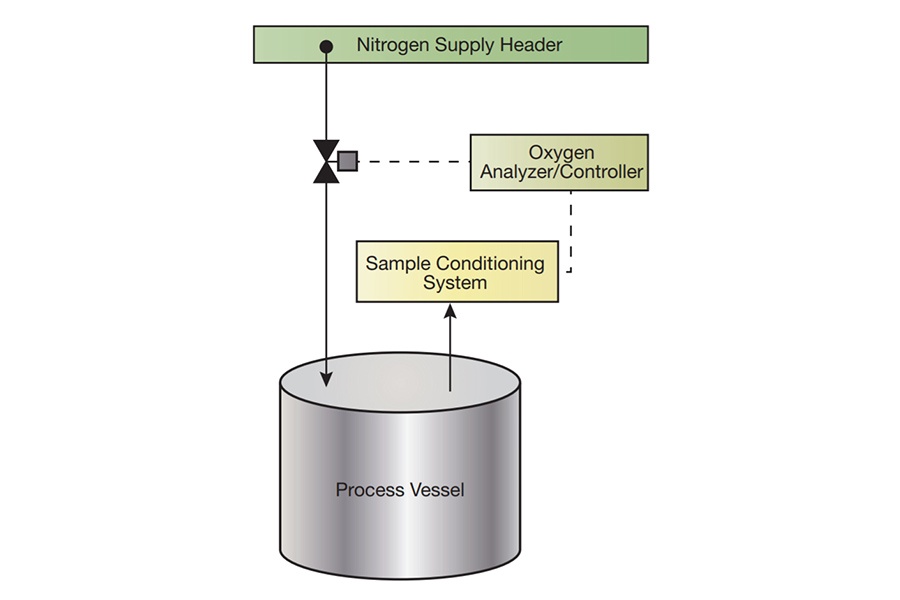
What is Nitrogen Blanketing?
Nitrogen (N) blanketing is a process by which nitrogen is added to fill the headspace (the area between the fill line of a tank’s contents and the top of the storage vessel) to eliminate oxygen and moisture from storage tanks. Nitrogen is commonly used to blanket due to its extremely low reactivity with other substances, as well as its availability and relatively low cost. Other gases can also be used; however, some may be more reactive, and the costs higher, than nitrogen.
Why Blanket with Nitrogen?
Many industries, including oil, gas, and ethanol refineries, as well as chemical, pharmaceutical, and food processors, use nitrogen blanketing to prevent fires and explosions, and to preserve product quality.
Nitrogen blanketing can protect facilities from potentially catastrophic accidents when manufacturing combustible and explosive chemicals, such as ethanol and other volatile materials, since removing oxygen eliminates the possibility of a fire and/or an explosion. Moreover, tank blanketing with nitrogen prevents oxygen, water, and other unwanted substances from coming into contact with the contents of the storage tanks, and/or causing undue wear of the tanks themselves, as oxygen and moisture inside storage tanks can cause evaporation and corrosion that may result in structural damage to the tanks.
Cooking oil processors typically blanket with nitrogen to remove oxygen, which could otherwise oxidize the contents and negatively affect the taste and, might decrease the shelf life of the oils.
Monitoring Mitigates Risks in Nitrogen Blanketing
Depending upon the needs of the facility and the type of tank, nitrogen is commonly supplied by one of the following methods: continuous purge (a constant flow of nitrogen), pressure control (N is added to maintain a set pressure within the tank), and concentration control.
The concentration control method works by using an oxygen detection monitor, in conjunction with a nitrogen generator, to continuously measure the level of oxygen inside the storage tank, and, if necessary, owing to elevated oxygen levels, add nitrogen to eliminate excess oxygen in the tank.
To ensure facility safety, protect personnel, and preserve the integrity of the tanks’ contents while blanketing with nitrogen, employees in facilities utilizing concentration control must maintain proper oxygen levels within storage tanks, as too much oxygen can cause an explosion.
Proper oxygen monitoring equipment should be placed inside storage tanks to measure and control oxygen levels. Oxygen monitors should also be placed in any area where nitrogen is stored or used. Further, the O2 detection equipment should be capable of activating visual and audible alarms and, in the event of a nitrogen leak, stop the flow of nitrogen.
The same property–oxygen displacement –that makes nitrogen blanketing such a valuable process, can be deadly if nitrogen leaks from the supply lines or storage containers. Employees could suffocate from breathing oxygen-deficient air and, since N lacks color, and odor, there is no way, absent appropriate monitoring, to determine if there has been a leak.
PureAire Monitors
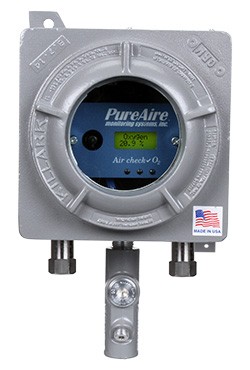 PureAire Monitoring Systems’ Explosion-Proof Oxygen Deficiency Monitor is perfect for facilities that use inert gases including, but not limited to, nitrogen, helium, and argon. The enclosure is specifically designed to prevent ignition of an explosion. The monitor is well suited for environments such as ethanol refineries, chemical manufactures, corn and grain processing facilities, powder coating plants, and the oil and gas industry, where combustible materials, dust, and ignitable fibers are present.
The Explosion-Proof Oxygen Monitor’s built-in pump continuously samples oxygen levels from up to 100 feet away, making it ideal for use with storage tanks, confined spaces, and other hard to reach areas where oxygen monitoring is essential.
The monitor constantly measures changes in oxygen levels and can be programmed to control the flow of nitrogen as needed to ensure safe blanketing. Additionally, should oxygen levels outside the storage tank drop to an OSHA action level, PureAire’s monitor will set off alarms, complete with horns and flashing lights, alerting personnel to evacuate the area.
The monitor will remain accurate at temperatures as low as -40C. PureAire’s durable, non-depleting, zirconium oxide sensor will last up to 10+ years in a normal environment without needing to be replaced.PureAire oxygen monitors measure oxygen 24/7, with no time-consuming maintenance or calibration required.
In short, PureAire’s Explosion-Proof Oxygen Monitor enables oil, gas, and ethanol refineries, food processors, and other industries blanketing with nitrogen, to preserve, in a cost-effective manner, the well-being of their employees, the integrity of their products, and the safety of their facilities.