

Nitrogen Refrigerated Trucks a New Trend? An Alternative to Diesel Powered Refrigeration
- By : PureAire Monitoring Systems
- Posted on : March 26, 2020
- News Room
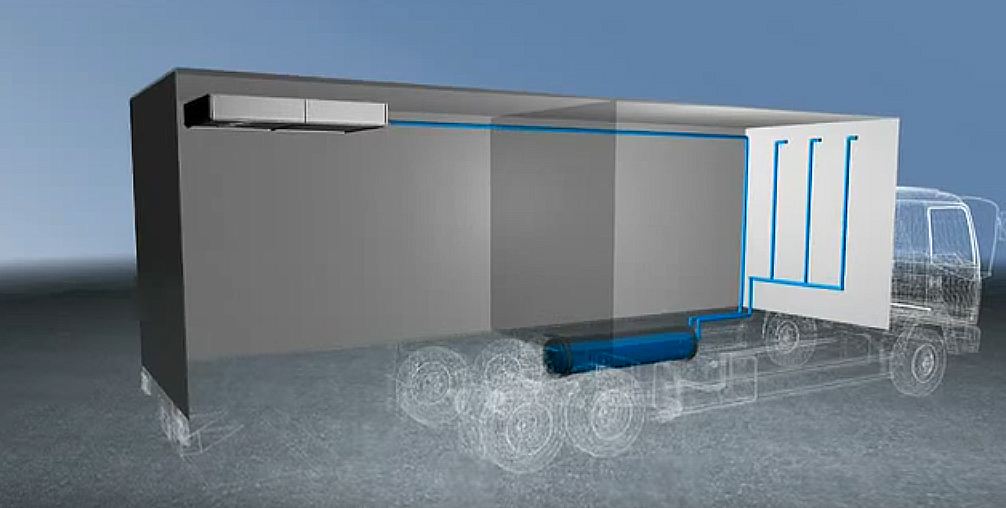
Thanks to technological innovations, the food distribution industry has a greener way to protect refrigerated food during transit: Nitrogen refrigeration. The existing system relies on diesel-powdered mechanical refrigeration units. Although these units are effective, they release significant levels of noise and air pollution. While the new innovations decrease emissions to safeguard the environment, there is a hidden health risk transportation companies must take into account.
How Liquid Nitrogen Refrigeration Works
The new system uses a liquid nitrogen system to cryogenically chill food. A storage tank mounted underneath the truck can be easily refilled when empty. Since the tank is stored outside the truck, the liquid nitrogen never comes into direct contact with the food.
To cool the refrigerated container, liquid nitrogen first passes through a heat exchanger. As the nitrogen moves through the heat exchanger, it evaporates. High-powered fans inside the container circulate the chilled air through the compartment, helping keep all food safely chilled below the temperature danger zone.
The traditional mechanical refrigeration system emits significant noise while in operation. Even when the truck itself is off, the refrigeration unit can cause as much as 80 dB of noise, which is roughly as much noise as a busy urban environment. This noise level exceeds the typical noise pollution levels in cities, thus limiting the hours when truckers can make deliveries. Additional downsides to the mechanical refrigeration system include reliance on harmful refrigeration chemicals and expensive maintenance and repair costs.
In contrast, the liquid nitrogen system falls beneath the noise pollution thresholds, so deliveries can be made at any time. This benefits both truckers and restaurants, grocery stores, and other businesses who may want to accept deliveries outside of business hours.
The liquid nitrogen system, or N2 system, also reduces carbon dioxide emissions significantly and does not use harmful refrigerants to keep food cool. Transportation companies who want to green their image or offer their clients increased flexibility will enjoy the liquid nitrogen refrigerant system for these reasons.
While the cryogenic system reduces costs and pollution associated with mechanical refrigeration, the N2 system is not perfect. Liquid nitrogen does pose a safety risk if it comes into contact with the food or the environment. If a truck rollover accident caused a nitrogen spill, for example, individual health and environmental dangers abound.
If the nitrogen gas seeps into the load chamber in the accident, it could turn the truck chamber into an oxygen deficient environment. Staff who opened the truck chamber to check on their load could become dizzy, pass out, and die within minutes of entering the oxygen deficient space.
The liquid nitrogen itself has cryogenic properties, which is why it’s been used to freeze off cancerous cells and warts. A worker cleaning up the spill must take precautions to avoid getting liquid nitrogen on their skin. In a worst-case scenario, an employee could lose a finger if it was immersed in liquid nitrogen.
How to Safeguard Truckers Against Liquid Nitrogen Dangers
An O2 deficiency monitor, also called an oxygen monitor, can protect employees from the dangers posed by liquid nitrogen. These monitors continually measure the amount of oxygen in the load chamber. When the cryogenic system is working properly, oxygen will naturally remain at safe levels and the alarm will stay silent yet vigilant. In the event that nitrogen gas leaks into the load chamber — due to a system malfunction or an accident – oxygen levels will start dropping. Once the environmental oxygen levels falls below OSHA thresholds, the oxygen monitor will flash and sound an alarm. This notifies staff that safety hazards exist, so they will not open the load chamber and enter an oxygen deficient environment.
Since staff can succumb to asphyxiation within minutes, the O2 deficiency monitor is necessary to monitor system performance and keep employees safe if anything goes wrong. Since nitrogen is invisible and odorless, employees have no other way to know whether the system’s operating as it should or whether there is an N2 leak.
Oxygen monitors from PureAire use zirconium oxide sensors, which provide reliable service for 10+ years. To learn more about PureAire products, please visit www.Pureairemonitoring.com.
http://www.bbc.com/news/magazine-19870668