

Oxygen Monitor for Foup’s in Semiconductors and Cleanrooms
- By : PureAire Monitoring Systems
- Posted on : November 12, 2015
- News Room
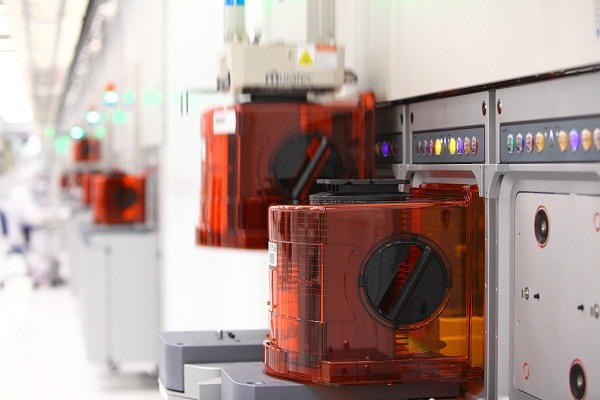
Over time, the contamination control requirements in the semiconductor industry have become more stringent. Employees now must spend more time adhering to cleaning protocols to preserve the sanitary nature of the environment and comply with regulations. The front-end unified pod (or FOUP) began appearing in semiconductors in the 1990s, serving as a transportation box to safely and securely hold silicon wafers and ensure easier compliance with the industry’s contamination control requirements.
FOUPs allow the wafers to remain in a sterile environment, while also remaining isolated from the cleanroom itself. Not only does this save time, but this also saves money by lowering the maintenance needs and investments needed to maintain a clean room. Widespread today, FOUPs must be properly cleaned and maintained in order to remain functional. Since a single FOUP can cost $1,000,000’s so this is not something to be taken lightly by staff.
Why Cleanliness is Critical to the Semiconductor Industry
Maintaining a cleanroom is so important because air particles can get on equipment or tools and compromise them. During manufacturing processes such as etching, the wafers held inside FOUPs are removed from the isolated environment of the FOUP and then subjected to different chemicals. After the etching process ends, trace amounts of these chemicals remain on the wafers. If these were to be returned to the FOUP, they would contaminate the closed atmosphere with chemical residue. This could wreak havoc on the remaining wafers stored in the clean environment of the FOUP. Were this to happen, FOUPs and the wafers inside would need to be cleaned – a very expensive and time-consuming process.
The average FOUP can last for roughly five years before it needs to be replaced. To extend its lifespan and keep all components clean and sanitary, it is necessary to clean FOUPs periodically and to maintain good laboratory habits to minimize the mishandling of FOUPs.
Compressed dry air or an inert gas such as nitrogen are common choices for the effective cleaning of FOUPs. Studies have shown that passing nitrogen gas over the lower ports and front-end environment of the FOUPs is a reliable way to clean the interior by removing debris and chemical residue stuck inside. While this is useful for reliable FOUP cleaning, introducing nitrogen into the laboratory environment can pose a safety hazard.
Safety Risks of FOUP Cleaning With Nitrogen
Nitrogen gas can displace oxygen if it is released in a closed environment. Were nitrogen to leak from the FOUP and into the clean room, it could reduce levels of oxygen in the air below safe breathing levels. In a worst-case scenario, staff could become sick or die from lack of oxygen. Since both oxygen and nitrogen are colorless and odorless gases, staff cannot tell how much oxygen is in the air, or whether nitrogen used to clean FOUPs has escaped through a leak.
An oxygen monitor can evaluate the levels of oxygen in the air to ensure that nitrogen used to clean FOUPs does not make its way into the clean room, to compromise the air quality and safety there. A wall-mounted O2 monitor takes periodic readings of the level of oxygen in the room. As long as oxygen levels remain in an acceptable range, the sensor will continue to operate as usual.
If oxygen levels were to drop such that employee health and safety might be compromised, the oxygen deficiency monitor would set off an alarm that would tell staff to evacuate. Staff then have enough time to exit the clean room and avoid health problems associated with oxygen-deficient environments.
When looking for an oxygen monitor for FOUPs, it is vital that the O2 monitor be as hardy and long-lasting as the FOUPs themselves. At PureAire, we make oxygen sensors guaranteed to last for 10 years. Our O2 monitors do not need calibration or maintenance to perform, unlike other brands of oxygen monitors. To ensure a clean, safe environment, while protecting your investment, choose the best in oxygen deficiency monitoring. Learn more about our products at our website, www.pureairemonitoring.com.
Source
http://www.entegris.com
http://micromagazine.fabtech.org