Anaerobic Digestion Process
Oxygen monitoring is an essential safety and process control measure in facilities that utilize anaerobic digesters. Although the digestion process occurs in an oxygen-free environment, it is important to monitor the surrounding areas to ensure oxygen levels are appropriate for both safety and operational efficiency. The anaerobic digestion process is a multi-stage process which includes:
- Hydrolysis: During hydrolysis, enzymes break down complex organic molecules such as carbohydrates, fats, and proteins into simpler molecules such as sugars, fatty acids, and amino acids.
- Acidogenesis: Acidogenic bacteria further break down the simple molecules produced in hydrolysis into volatile fatty acids, alcohols, hydrogen, and carbon dioxide.
- Acetogenesis: During this stage, products arising from fermentation, namely volatile fatty acids and alcohols, convert into hydrogen, carbon dioxide, and acetic acid.
- Methanogenesis: Methanogenic archaea convert acetic acid, hydrogen, and carbon dioxide into methane and water. This stage is crucial for biomethane production.
Surrounding Areas for Safety
Oxygen monitoring safeguards workers and maintains system safety in areas where gas displacement or oxygen contamination may occur.
- Confined Spaces:
Best practices include monitoring O2 levels with oxygen detectors, such as PureAire O2 Deficiency Monitors, to ensure safe working conditions, entry points, maintenance areas, and surrounding chambers. Oxygen-deficient environments, caused by displacement from methane or carbon dioxide, pose a risk of asphyxiation. - Headspace Monitoring:
Fixed oxygen monitors continuously measure oxygen levels in digesters’ headspaces to confirm they are minimal. This reduces the risk of explosive conditions when methane is present. - Gas Storage and Handling:
Oxygen analyzers, like PureAire Oxygen Monitors, detect the presence of oxygen, which may cause contamination in biogas storage tanks and pipelines. This contamination compromises gas purity and increases the risk of fire or explosion.
Maintenance and Purge Systems
- During Maintenance:
Digesters produce a variety of harmful gases including but not limited to methane, carbon dioxide, and hydrogen sulfide. Personnel need to be vigilant when digesters are emptied or cleaned; using oxygen monitors ensures the internal atmosphere is free from dangerous gases and safe for entry. - Ventilation Checks:
Oxygen levels are monitored during the purging process to confirm adequate ventilation.
Biogas Systems
- Purity Control:
Oxygen analyzers verify that oxygen levels remain within safe and operational limits in biogas pipelines and upgrading systems. This ensures compliance with safety standards and maximizes energy production efficiency.
Emergency Preparedness
Oxygen monitoring systems, such as PureAire O2 Deficiency Monitors, can detect accidental oxygen ingress into the anaerobic digestion system, alerting operators to potential risks to process stability or safety.
PureAire Oxygen Monitors

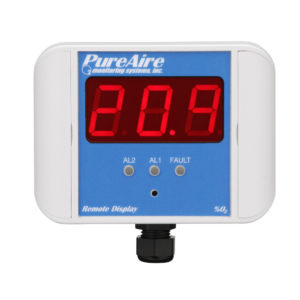
PureAire O2 Deficiency Monitors continuously monitor critical areas around anaerobic digesters, ensuring safety and compliance in even the most demanding environments and, in the event of a gas leak and a drop in oxygen to an OSHA action level, will set off an alarm, complete with horns and flashing lights, alerting employees to evacuate the affected area.
Our Monitors offer thorough air monitoring, with no time-consuming maintenance or calibration required. An easy-to-read screen displays current oxygen levels for at-a-glance reading by employees.
PureAire’s durable, non-depleting, long-life zirconium oxide sensor will last for more than 10 years in a normal environment without needing to be replaced.
While oxygen monitoring is not required inside the core anaerobic digesters, it is vital in ensuring safety and operational integrity in surrounding areas and systems. Oxygen monitors help protect workers, maintain biogas quality, and mitigate risks, making them an essential component of anaerobic digestion facilities.