For flash freezing nothing beats a liquid nitrogen or carbon dioxide immersion or tunnel style freezer for efficiency, overall performance, and cost savings. If you haven’t yet switched to an immersion freezer, doing so now could position you to better compete in your market segment and save money over time. Learn more about why these freezers are a must for frozen food manufacturers.
Immersion Freezers: How They Work
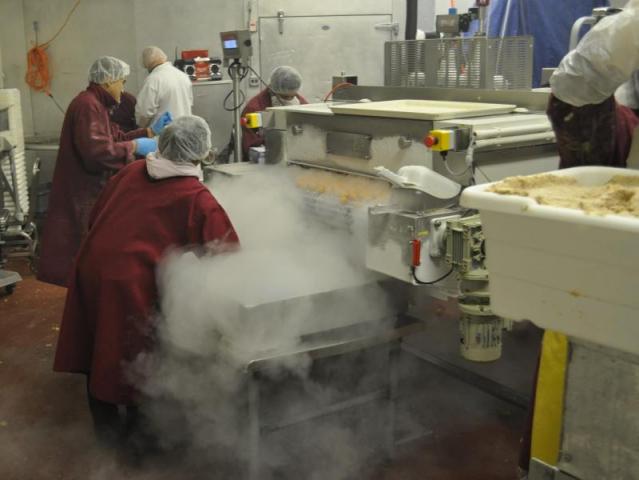
Ideal for freezing seafood, poultry, meat, and marinated or glazed products, these freezers use a conveyor belt to ferry food items through a liquid nitrogen or carbon dioxide bath. When the food is fully immersed in the gas, which is held at a steady temperature suitable for freezing food items, it freezes completely in seconds. This locks in nutrients, flavor, and texture to preserve the best qualities of the item.
Unit controls accommodate for fluctuations in the product load and variations in temperature of the incoming food items to enforce quality control every time. A turn up/turn down capability allows you to save money by moderating unit performance; the unique space-saving design and tunnel orientation reduces air infiltration and helps maintain best practices in unit sanitation.
By offering a better yield retention, a low capital investment, and lower operating costs, these units allow you to increase your production rates without increasing your staffing or your physical footprint. The immersion freezing system is customizable for a wide range of products and ensures the consistent quality in frozen foods you need.
These freezers run on inert gases, which deplete oxygen from the air. To protect workers and maintain safety, you must ensure that your freezer has an O2 monitoring system, which ensures that there is enough oxygen in the environment and alerts staff if the level of oxygen falls below the minimum safe level.
Why You Need an Oxygen Monitor For Your Immersion Freezer
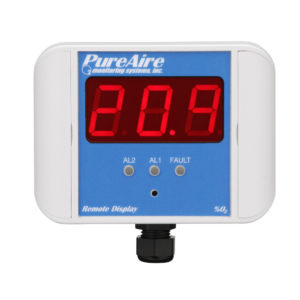
If oxygen levels in the work environment get too low, staff working in the area may not have enough oxygen to breathe and could asphyxiate. PureAire’s O2 monitors are capable of performing in sub-zero environments, where other oxygen sensors may fail to perform consistently.
The oxygen monitor keeps tabs on the amount of oxygen in the environment at all times. Even in a sensitive environment like the tunnel or immersion freezer, where the temperatures are constantly changing as food cycles off of and on to the conveyor belts, the oxygen monitor is able to provide a stable reading to ensure accuracy and protect your employees.
This oxygen deficiency monitor features a zirconium sensor, which is able to detect oxygen levels across the temperature spectrum and regardless of humidity. The oxygen monitor is guaranteed to perform accurately for a period of 10 years or more, without requiring the time-consuming maintenance that another oxygen detector might need. Additionally, you will not need to calibrate the oxygen monitor, as you would with other models. This offers an improvement over disposable sensors, which increase your bottom line and the amount of waste you produce.
When you switch to a tunnel or immersion freezer, you stand to boost your production capacity and your bottom line. Oxygen detectors from PureAire can help you save as much as $475 per year off our operating expenses while supporting your overall business growth.