

PureAire Universal Gas Detector Offers Protection Against Toxic Levels of Ammonia
- By : PureAire Monitoring Systems
- Posted on : April 20, 2016
- News Room
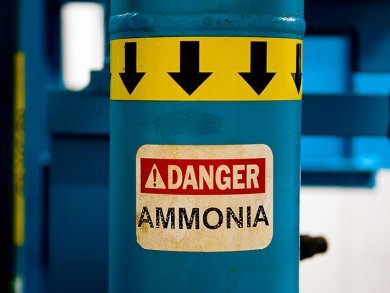
In March of 2016, an ammonia gas leak at a seafood processing plant in Boston left one worker dead. The fumes at the plant were so powerful that firefighters could not promptly enter the scene to mitigate the gas leak and try to save the staff member until much later. Reports show that 5,300 pounds of ammonia gas leaked out of the plant. If you work with ammonia at your facility, learn why this gas is so dangerous and one simple thing that you can do to prevent a tragedy like this from affecting your workers.
The Hidden Dangers of Ammonia
Ammonia is commonly used in refrigeration of dairy, meat, food processing, and cold storage. In fact, almost everything you can buy at your local grocery store has passed through an ammonia refrigeration site before making its way to your local store.
A mixture of nitrogen and hydrogen, ammonia has been used in refrigeration since the 1800’s. It is energy-efficient, inexpensive, more environmentally friendly than chlorofluorocarbon (Freon) refrigerant, and widely available via commercial manufacturing. While it may have started off as a refrigerant of food, ammonia is also used today for ice and water chilling in office buildings. In Europe, ammonia has additional applications in air conditioners in public buildings including hospitals and airports. The substance is also used in industries as diverse as semiconductor manufacturing, environmental emission monitoring, agricultural fertilizer, and chemical manufacturing.
As useful as ammonia is, it is also a dangerous substance when not properly stored. It can combust at high heat. While colorless, ammonia gas has a noxious odor.
When workers are exposed to ammonia gas, they can experience skin and eye irritation. If concentrations of ammonia are high, burning and injury can result. In some cases permanent eye damage or blindness can occur.
Workers will immediately know they are exposed to a harmful substance from symptoms including respiratory and nasal burning. Even though staff have a warning due to ammonia’s odor, the substance causes adaptation. Workers may perceive a slight ammonia odor at low levels of exposure, and adjust to the scent so they can’t tell when concentration has surpassed acceptable levels.
In a worst case scenario, those exposed to ammonia will experience respiratory failure and die. The good news is, there are ways to protect staff from ammonia exposure using universal gas detection tools.
How PureAire Universal Gas Detectors Protect Staff from Ammonia Exposure
PureAire’s universal gas monitors protect against not only ammonia, but bromine, chlorine, hydrogen chloride, hydrogen fluoride, hydrides and other gases. Once installed, the monitor continually checks levels of gases and provides a visual and aural alert if levels of any substance exceed safe levels.
This is a simple solution for round the clock gas monitoring for ammonia and many other hazardous gases. While ammonia has an odor, many other dangerous gases do not. Gas monitoring protects workers against substances they can smell as well as “silent killers” they cannot see or smell. With a universal gas monitor installed, workers can perform their duties secure in the knowledge that they will be alerted if ammonia or another substance leaks into the environment.
After installation, the universal gas detector will work for years with normal cell maintenance. PureAire’s gas monitor are built to outlast the competition to provide improved peace of mind for management and staff.
If an ammonia leak were to happen, the gas monitor would sound an alarm so that workers can safely evacuate before succumbing to respiratory damage or failure. With staff outside the premises, everyone is thereby safe until first responders can deal with the leak. For example, in the Boston incident, the worker would have been able to escape the seafood plant with his life, resulting in an ammonia leak with no fatalities.
Not only is gas detection the right thing to do for peace of mind, it can safeguard your business assets and personnel from dangers.
Source
http://www.bostonherald.com/news/local_coverage/2016/03/worker_dies_in_ammonia_leak_at_plant_in_seaport
https://www.health.ny.gov/environmental/emergency/chemical_terrorism/ammonia_tech.htm