

CO2 Monitor? Why an Oxygen Monitor May Be a Better Solution
- By : PureAire Monitoring Systems
- Posted on : July 14, 2012
- News Room
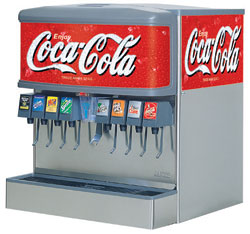
Carbon Dioxide (CO2) is the primary compressed gas used for dispensing beverages at fast food chains. This gas is also used in restaurants, gas stations, and grocery stores. When CO2 leaks into a confined space or basement, it creates a very unsafe environment for employees because it lowers the concentration of breathable oxygen. History seems to repeat itself all too often while dealing with CO2 leaks from dispensing systems. Due to numerous CO2 leaks in the workplace, lower oxygen levels have resulted in employees becoming sick or dying, from asphyxiation.
Below is a link to the Phoenix Fire Department video on a CO2 leak at a fast food chain. An employee and two firemen were overcome by a lack of oxygen due to a CO2 leak in the basement of a restaurant. http://nfpa.typepad.com/fireservicetoday/2011/10/lesson-learned-co2-leak-at-mcdonalds-harmful-to-employee-and-responders.html
The use of a CO2 monitor is accepted as a standard method in the industry, however since a leak actually creates an oxygen deficient environment; the use of an Oxygen monitor would provide better protection. CO2 displaces oxygen.
PureAire is a leading supplier of oxygen monitors for protecting people in the workplace. Its Oxygen monitor uses a proprietary non depleting sensor with a 10+ year life. The monitor requires no maintenance or the need for routine calibration; a very important advantage over the CO2 monitors being used.
The use of a CO2 monitor to protect people against oxygen deficiency in fast food chains can be the wrong approach since it’s the lack of breathable oxygen that is causing injury. Companies however are attracted to the low cost of CO2 monitors and since there is no regulation to use oxygen monitors, there is no incentive to provide better protection. Virtually every response to a CO2 leak resulted in a conclusion that workers were overcome by a lack of oxygen, which cannot be detected using a CO2 monitor.
PureAire believes that the use of a CO2 monitor alone cannot provide adequate protection to a leak. When storing large cylinders of liquid CO2 in confined spaces, complete protection should include an oxygen deficiency monitor.
Most users of CO2 dispensing systems do not have trained technical staff to maintain a monitoring system. All monitoring and system functions on PureAire’s oxygen monitor are 100% supervised and fault protected. Employees are always assured of continuous protection and are alerted to any failures.
The earth is a wonder source of calibrated oxygen and under normal ambient conditions of 20.9%, the monitor is continuously exposed to calibrated gas. CO2 monitors read zero when not exposed, and therefore require routine calibration to insure they’re working. This is not required for PureAire’s oxygen monitor.
In addition to its long life, no maintenance sensor, the oxygen monitor has built-in alarm relays for controlling ventilation fans or connecting to standard fire alarm panels. A major producer of CO2 gas actually uses PureAire oxygen monitors in their gas processing plant because of their concern of lower oxygen levels due to a CO2 release. We agree with them.