Water-Resistant Oxygen Monitor with 10+ Year Sensor

Item : 99118 | In stock

$3,505.00

Product Summary

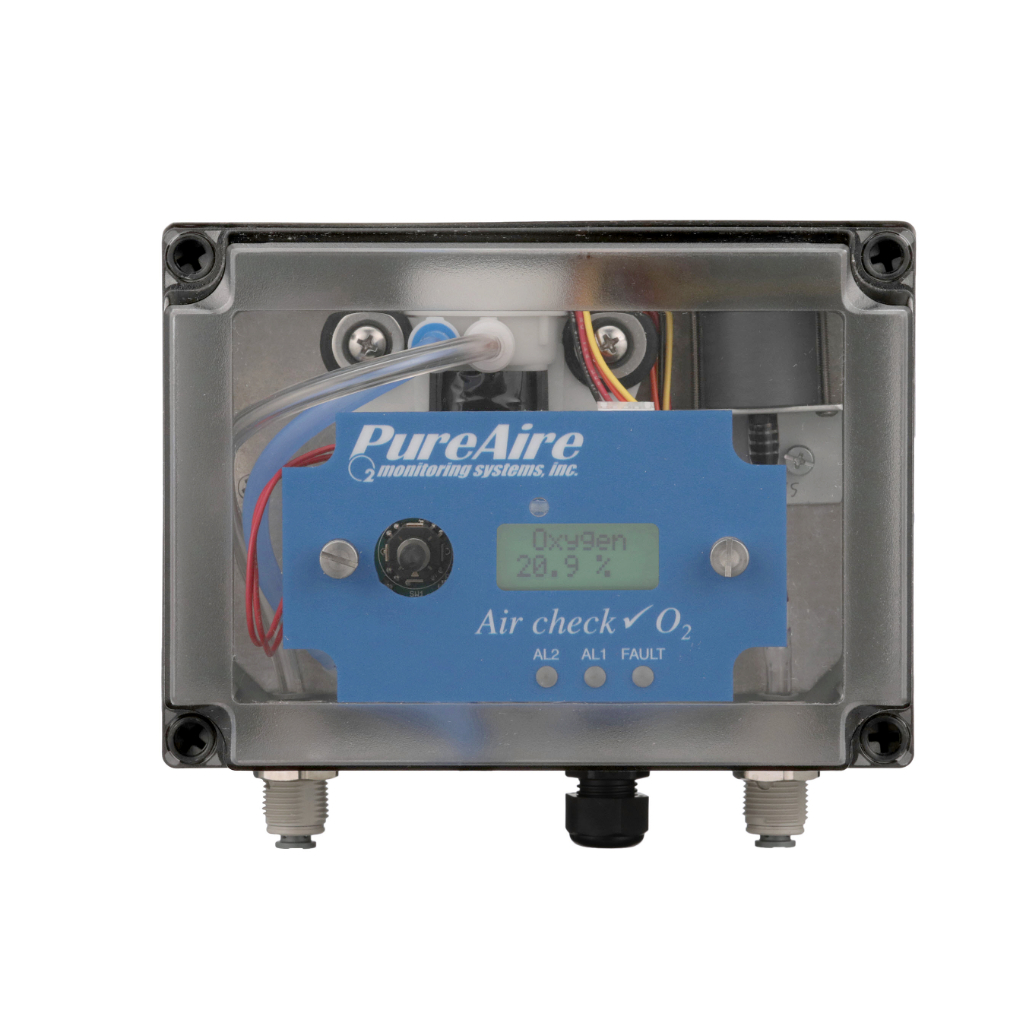
The NEMA 4X/IP67  Water-Resistant Sample Draw Oxygen Monitor is a self-contained oxygen deficiency system suitable for remote sampling of confined spaces requiring daily wash-downs. The Water Resistant Oxygen Monitor can sample from up to 100 feet away and is ideal for facilities that use inert gases, including, but not limited to, nitrogen, helium, and argon. The Water Resistant Oxygen Monitor is perfect for environments such as breweries, bottling plants, food industries, flash freezing, and laboratories. The monitor will remain accurate at temperatures as low as -40C. PureAire’s durable, non-depleting, zirconium oxide sensor will last up to 10+ years without needing to be replaced.

Two-Year Extended Warranty Available for this product in the US, Canada, and Mexico
  • Long-life 10 + Years average sensor life
  • NEMA 4X/IP67 Water-Resistant Enclosure
  • Two-Alarm Relays for 19.5% and 18.0%
  • No Scheduled Maintenance Required
  • 3 Year Warranty
  • Digital Display
  • 4-20mA Analog Output (Active)
  • No drift due to thunderstorms or barometric pressure changes
  • Wall mounting brackets
  • Built-in Flow Sample Pump
  • UL, C UL, and CE Approvals

Long Last Zirconium Sensor

As a leading manufacturer of oxygen monitors, PureAire Monitoring Systems puts safety, performance, reliability, and affordability first. Our oxygen monitors last for 10+ years with no replacement, no scheduled maintenance, and no hidden costs.

The Water Resistant Oxygen Monitors work well anywhere gas leaks cause oxygen depletion, including in food and beverage, bottling plants, flash-freezing tunnels, laboratories, manufacturing facilities, and freezers. Our monitors are built with a long-lasting zirconium oxide sensor cell, which delivers reliable monitoring against leaks of argon, helium, and nitrogen for 10 years. The Monitor includes visual alarms, but it may be connected to fire alarm systems to amplify the reach.

The Water-Resistant Oxygen Monitor is easy to set up, easy to operate, and requires no calibration once installed. A simple, periodic span adjustment may be necessary. Supervised watchdog software checks that everything is working properly and notifies you of any inconsistencies on the monitor. Immune to performance changes from barometric pressure drops, humidity, and temperature, these monitors are reliable and cost-effective. The Occupational Safety and Health Administration (OSHA) specifies that a hazardous condition may include one where the oxygen concentration is below 19.5% or above 23.5%.


Sampling Method Sample Draw for Splash Down Areas
Gases Detected Oxygen (O2)
Range 0 – 25 %
Accuracy  Delivers ± 0.2% O2 accuracy (± 1 % of Full Range)
Operating Temperature -40º to 140ºF (-40º to 60ºC)
Display 3/4″ LCD Digital Display, Back Lit
Sensor Type Long-life zirconium oxide sensor cell
Sensor Life > 10 years under Normal Conditions
Signal Outputs 4-20 mA Analog Output (Active)
Dual-Level Alarm Relay Contacts
Power Requirements 24 VDC
300 mA
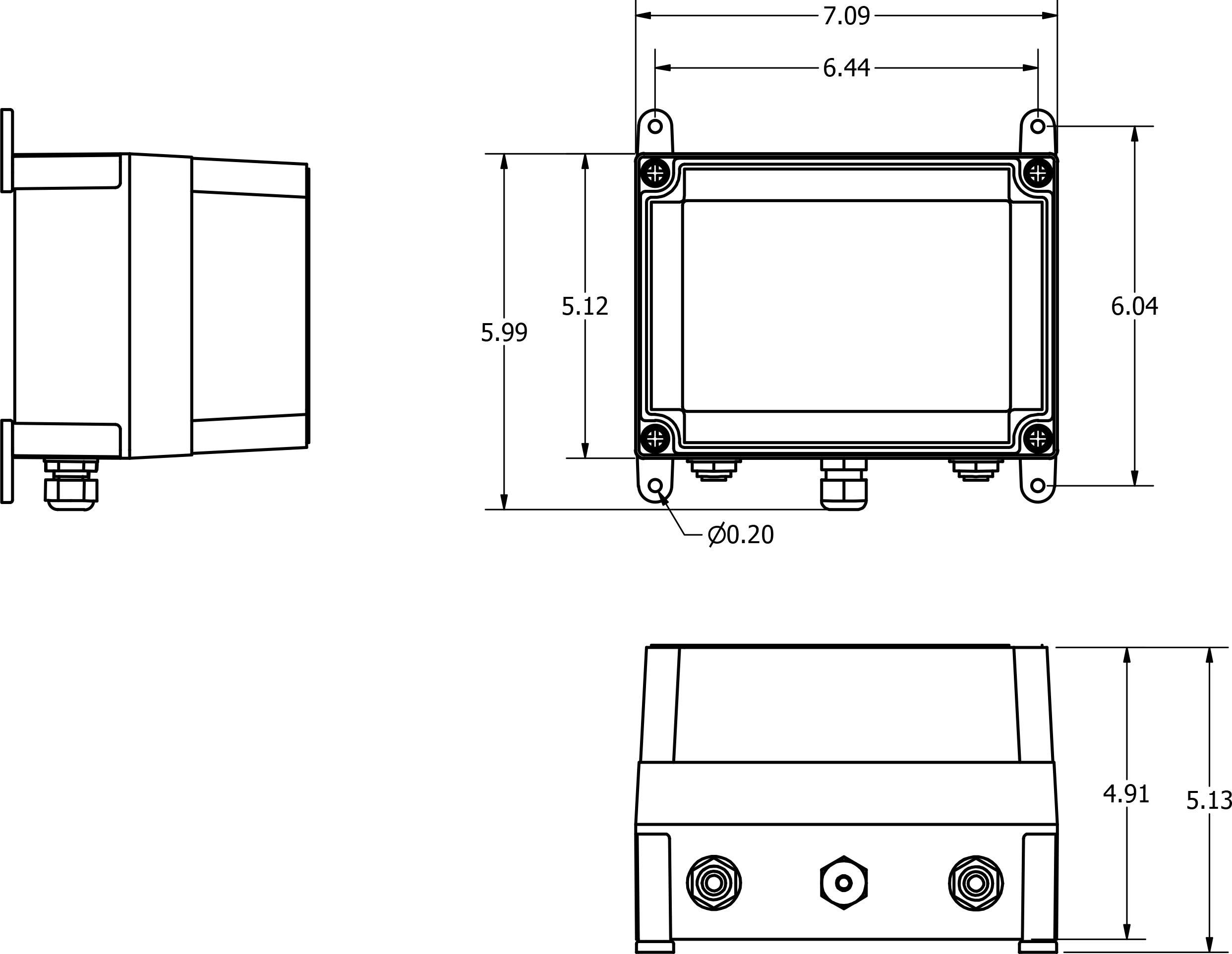
Width 7.25 in
184.2 mm
Height 6.0 in
152.4 mm
Depth 5.0 in
127 mm
Weight 2.8 lb
1.3 kg
Enclosure1 Polycarbonate NEMA 4X/IP67
Calibration Calibration is not required. Periodic span adjustment as needed.
Country of Origin USA
Harmonized Tariff Code 8531.10.0045

1 Not intended for explosive atmospheres

Additional O2 Monitor Accessories List Price
8 Channel Controller US (P/N # 99196)
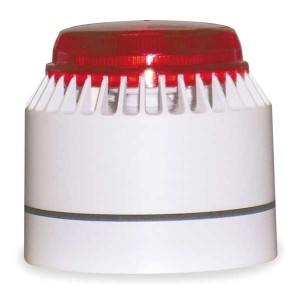
Horn and Strobe  US (P/N # 42002)
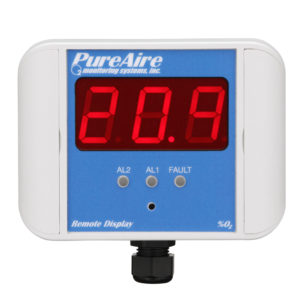
Remote Display US (P/N # 99091)

Connects to Distributive Control Systems and Programmable Logic Controllers 

The Water Resistant Oxygen Monitor can be used with PureAire’s proprietary controllers, either single or multichannel. Dual selectable alarm relays set off strobe lights and remote horns, so that staff can learn of the hazard. Individuals can operate the oxygen monitors remotely by as much as 1,000 meters or 0.6 miles from the centralized control systems.

Better Oxygen Sensor Cell

Unlike other oxygen monitors, PureAire’s Air Check O2 Deficiency Monitor relies upon a Current Limiting Zirconium Oxide Oxygen sensor. This sensor does not need a reference gas and can perform reliably in environments that contain 100 percent nitrogen. The sensitive monitor can tell oxygen levels by percentages, so it can operate in lower-temperature environments than the more frequently used concentration-type cells. The improved cell helps PureAire sensors last for 10+ years.

One-Step Sensor Adjustment

PureAire Oxygen Deficiency Monitors require occasional testing with nitrogen to validate the sensor’s response to low oxygen levels. While calibration is not necessary for our monitors to accurately measure oxygen depletion levels1, annual fine-tuning might be needed to ensure the sensor’s span accurately corresponds to the standard 20.9% oxygen concentrations.

PureAire’s Auto-Span not only simplifies the process of adjusting the span of the oxygen sensor but also provides a quick check of the sensor and the monitor’s response to an oxygen-deficient atmosphere. With a press of a button, this feature saves you time and money, protects your facilities and employees, and, most importantly, provides you with the reassurance of consistently reliable performance, making it a valuable addition to your safety measures.

1Please follow your facility’s safety guidelines and state and local regulations regarding calibration requirements for safety equipment.

O2 Monitor System Features

PureAire offers its Air Check O2 Deficiency Monitor in multiple configurations. Every unit comes with a choice of a low-cost basic display monitor or a full-featured, dual-level monitor with user-selectable alarm relays. When built-in alarm relays are used, the sensor continuously monitors electronics, sensor cells, and sample flows. Any faulty information is provided to the front panel LED, mA output, and alarm relay, for instant notification.


Water-Resistant Sample Draw Oxygen Monitor Literature

O2 Sample Draw Monitor Manual – Rev 5.07

Safety Risks of Oxygen Deficiency

NIH – Protocol for Use & Maintenance of Oxygen Monitoring Devices 2021

Sample Draw Oxygen Monitor into horn/strobe or remote display

SAM Case Drawing

Price Savings for PureAire Sensor vs Disposable Sensors

Oxygen Monitor Sales Presentation

Remote Digital Display p/n 99091

Horn/strobe 24VDC Red


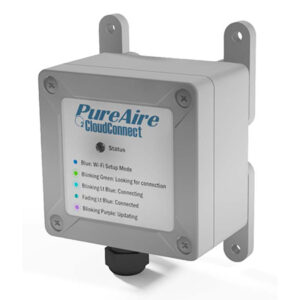
CloudConnect

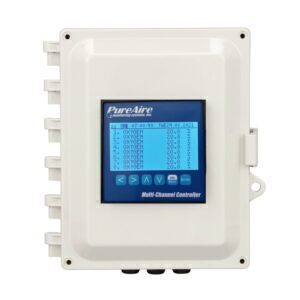
8-Channel Touch Screen Controller 

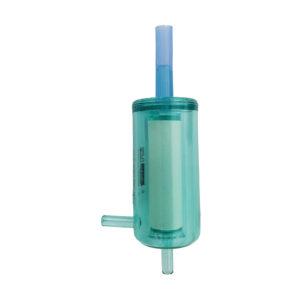
Replacement Filter with Drain 90179

Remote Sampling

Sample-draw design supports monitoring at points that are hard to access directly.

Water-Resistant Build

Designed for environments where moisture or washdown is a concern.

O₂ Safety Coverage

Helps identify oxygen deficiency risk in inert-gas environments.

Operational Confidence

Supports safer operations by making oxygen status visible during work.

Oxygen deprivation is a silent killer. Oxygen-depleting gases, such as nitrogen, argon, and helium, are odorless and colorless, making leaks impossible to detect, unless appropriate monitoring is in place.

PureAire oxygen deficiency monitors can be used to monitor nitrogen, argon, and helium. Carbon dioxide can also be monitored with PureAire’s dual oxygen/carbon dioxide monitor.

PureAire uses a proprietary, non-depleting, zirconium oxide sensor that will last up to 10 years in a normal environment without needing to be replaced.

PureAire’s sensors do not operate under partial pressure, meaning that a PureAire sensor will not need to be adjusted to account for different elevations. Additionally, the sensors will not drift due to changes in barometric pressure.

In contrast, other gas detection companies use depleting, electrochemical sensors. These sensors, because they are depleting, operate for 1-2 years before needing to be replaced. Electrochemical sensors do not offer long-term solutions to companies committed to safety.

PureAire sensors are built to last 10 years. Often, the sensors work much longer. In fact, some of our first customers who started using PureAire products in 1997 report that the sensors are still in operation today.

On the other hand, an oxygen monitor that uses a depleting, electrochemical sensor is like a battery in that, as the sensor depletes, it begins to lose its power and responsiveness. In order to operate accurately, electrochemical sensors must be calibrated frequently.

PureAire sensors are made of non-depleting zirconium oxide, and calibration is typically not required.

However, a visual check of the monitor should be done once a year to verify that the sensor is functioning properly, and span adjustments should be done, as necessary. The sensor requires periodic testing with nitrogen to verify the sensor’s response to low oxygen levels.

In contrast, electrochemical sensors, because they deplete over time, will need to be calibrated every 2-3 months and totally replaced every 1-2 years.

Switching to a PureAire non-depleting, zirconium oxide sensor will save you time and money, while ensuring the safety of your workers and facility.

Electrochemical sensors offered by other gas detection companies lose accuracy over time and must be calibrated. Calibration recharges and resets the monitor to get an accurate reading. It is important to note that an electrochemical sensor can only be calibrated a finite number of times before it must be discarded.

PureAire’s non-depleting zirconium oxide sensor will not experience drift. Oxygen sensors from PureAire will provide long-lasting, reliable, and accurate monitoring for an average of10+ years.

The oxygen monitor covers an area of approximately 692 square feet when mounted on a wall and should be placed no more than 21 feet from potential leak sources such as gas lines, gas cylinders, or any areas where a gas leak might be expected to occur.

To ensure safety, the maximum distance between two monitors mounted to the same wall, should not exceed 30 feet. However, since cryogenic gases, such as argon, helium, and nitrogen, are unpredictable, we encourage you to contact PureAire for additional guidance specific to your needs.

In most circumstances, PureAire recommends that oxygen monitors be installed 3-5 feet away from gas cylinders or cryogenic gas lines. To enable employees to see the monitor display and verify its performance, PureAire recommends mounting an oxygen monitor 3-5 feet off the ground.

There are other options for mounting an oxygen monitor. For instance, PureAire sensors can sample the air from up to 100 feet away, or be installed within a glovebox, freezer, sealed chamber, or even underground. PureAire monitors can also work in environments that require KF-25 flanges, as well as in nitrogen/argon enriched environments.

PureAire’s Sample Draw Monitors pull a sample flow at a rate of 250 ccs per minute. We recommend using 1/4” OD x 3/16” ID polypropylene sample tubing. Using this internal tubing dimension, to calculate transport (response) time, add 2 seconds per foot of sample tubing. For example, if the sample tube is 10 feet long, the initial response time would be 20 seconds (10ft x 2seconds=20seconds) at 15 feet the response time would be 30 seconds (15ft x 2seconds=30seconds), etc.

The response time when using the entire 100 feet of sample tube will take 3.5 minutes (100ft x 2seconds=200seconds or 3.5minutes) for the sample to reach the monitor.