
Combustible/Toxic Gas Calibration Kit

Available Product Options. Please choose from the menu below | Out of stock

Product Summary

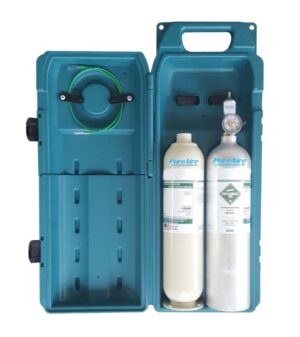
PureAire’s Calibration Kit is for use with our LEL Combustible Gas and Toxic Gas Detectors. It includes all the necessary equipment to ensure the gas sensors perform at their best. With a simple process, you can easily calibrate your sensors and make any necessary adjustments based on their response to increased levels of combustible or toxic gases.

PureAire’s LEL Combustible and Toxic Gas Detectors require periodic calibration for optimal performance.

To order, please contact a PureAire representative – 847-726-6000.

This product is currently out of stock and unavailable.

  • 2% Hydrogen 103-liter disposable cylinder, C-10  (94018)
  • 2.5% Methane 103-liter disposable cylinder, C-10 (94017)
  • 0.5 LPM C-10 Fixed Rate Regulator (94005)
  • C-10 Demand Flow Regulator (94007)
  • Tubing – 2ft
  • Calibration Cap – Flow Cap LEL (94009) or Flow Cap PPM (94010)
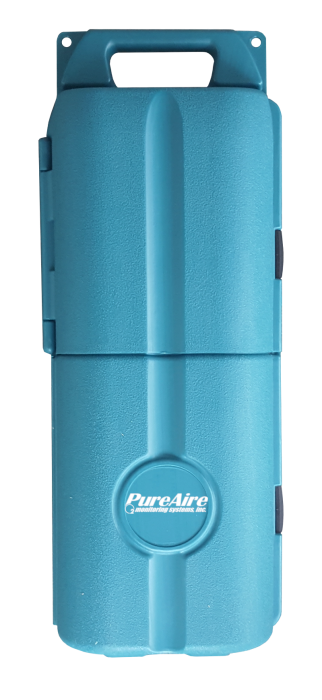
  • Durable Carrying Case (94012)

PureAire’s Combustible/Toxic Gas Calibration Kit contains the necessary equipment for on-site calibration, including calibration gases, tubing, an LEL or PPM calibration cap (depending on the gas measurement), and a fixed-rate or demand flow regulator. Exposing the sensor to a known gas concentration ensures accurate measurement of the gas level. PureAire’s LEL Combustible Gas Detectors require periodic calibration for optimal performance.

Please Note: Items in the Calibration Kit may be purchased separately.
Combustible/Toxic Gas Calibration Kit Product Literature

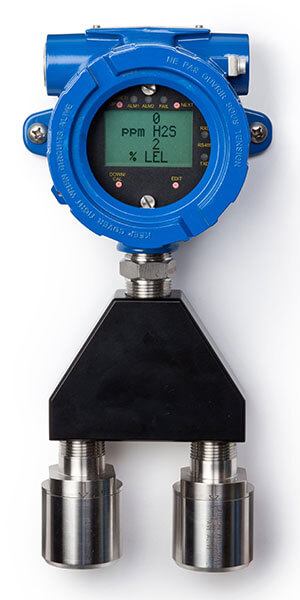
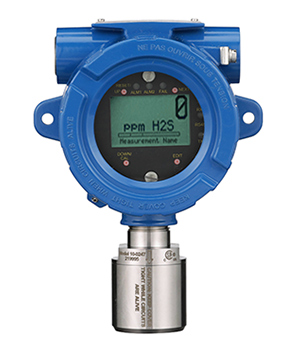
MPS Flammable Gas Monitor


Explosion-Proof Universal (EPU) Gas Monitor

Please contact PureAire for a complete list of compatible monitors.

On-Site Verification

Supports field checks using known calibration gas concentrations.

Service-Friendly

Makes routine checks faster for technicians and safety teams.

Improves Consistency

Helps maintain reliable sensor response through repeatable testing.

Supports Compliance

Helps document routine verification for safety programs.

Oxygen deprivation is a silent killer. Oxygen-depleting gases, such as nitrogen, argon, and helium, are odorless and colorless, making leaks impossible to detect, unless appropriate monitoring is in place.

PureAire oxygen deficiency monitors can be used to monitor nitrogen, argon, and helium. Carbon dioxide can also be monitored with PureAire’s dual oxygen/carbon dioxide monitor.

PureAire uses a proprietary, non-depleting, zirconium oxide sensor that will last up to 10 years in a normal environment without needing to be replaced.

PureAire’s sensors do not operate under partial pressure, meaning that a PureAire sensor will not need to be adjusted to account for different elevations. Additionally, the sensors will not drift due to changes in barometric pressure.

In contrast, other gas detection companies use depleting, electrochemical sensors. These sensors, because they are depleting, operate for 1-2 years before needing to be replaced. Electrochemical sensors do not offer long-term solutions to companies committed to safety.

PureAire sensors are built to last 10 years. Often, the sensors work much longer. In fact, some of our first customers who started using PureAire products in 1997 report that the sensors are still in operation today.

On the other hand, an oxygen monitor that uses a depleting, electrochemical sensor is like a battery in that, as the sensor depletes, it begins to lose its power and responsiveness. In order to operate accurately, electrochemical sensors must be calibrated frequently.

PureAire sensors are made of non-depleting zirconium oxide, and calibration is typically not required.

However, a visual check of the monitor should be done once a year to verify that the sensor is functioning properly, and span adjustments should be done, as necessary. The sensor requires periodic testing with nitrogen to verify the sensor’s response to low oxygen levels.

In contrast, electrochemical sensors, because they deplete over time, will need to be calibrated every 2-3 months and totally replaced every 1-2 years.

Switching to a PureAire non-depleting, zirconium oxide sensor will save you time and money, while ensuring the safety of your workers and facility.

Electrochemical sensors offered by other gas detection companies lose accuracy over time and must be calibrated. Calibration recharges and resets the monitor to get an accurate reading. It is important to note that an electrochemical sensor can only be calibrated a finite number of times before it must be discarded.

PureAire’s non-depleting zirconium oxide sensor will not experience drift. Oxygen sensors from PureAire will provide long-lasting, reliable, and accurate monitoring for an average of10+ years.

The oxygen monitor covers an area of approximately 692 square feet when mounted on a wall and should be placed no more than 21 feet from potential leak sources such as gas lines, gas cylinders, or any areas where a gas leak might be expected to occur.

To ensure safety, the maximum distance between two monitors mounted to the same wall, should not exceed 30 feet. However, since cryogenic gases, such as argon, helium, and nitrogen, are unpredictable, we encourage you to contact PureAire for additional guidance specific to your needs.

In most circumstances, PureAire recommends that oxygen monitors be installed 3-5 feet away from gas cylinders or cryogenic gas lines. To enable employees to see the monitor display and verify its performance, PureAire recommends mounting an oxygen monitor 3-5 feet off the ground.

There are other options for mounting an oxygen monitor. For instance, PureAire sensors can sample the air from up to 100 feet away, or be installed within a glovebox, freezer, sealed chamber, or even underground. PureAire monitors can also work in environments that require KF-25 flanges, as well as in nitrogen/argon enriched environments.

PureAire’s Sample Draw Monitors pull a sample flow at a rate of 250 ccs per minute. We recommend using 1/4” OD x 3/16” ID polypropylene sample tubing. Using this internal tubing dimension, to calculate transport (response) time, add 2 seconds per foot of sample tubing. For example, if the sample tube is 10 feet long, the initial response time would be 20 seconds (10ft x 2seconds=20seconds) at 15 feet the response time would be 30 seconds (15ft x 2seconds=30seconds), etc.

The response time when using the entire 100 feet of sample tube will take 3.5 minutes (100ft x 2seconds=200seconds or 3.5minutes) for the sample to reach the monitor.