Methyl Bromide Gas Monitor

Item : 99072 | In stock

$6,955.00

Product Summary

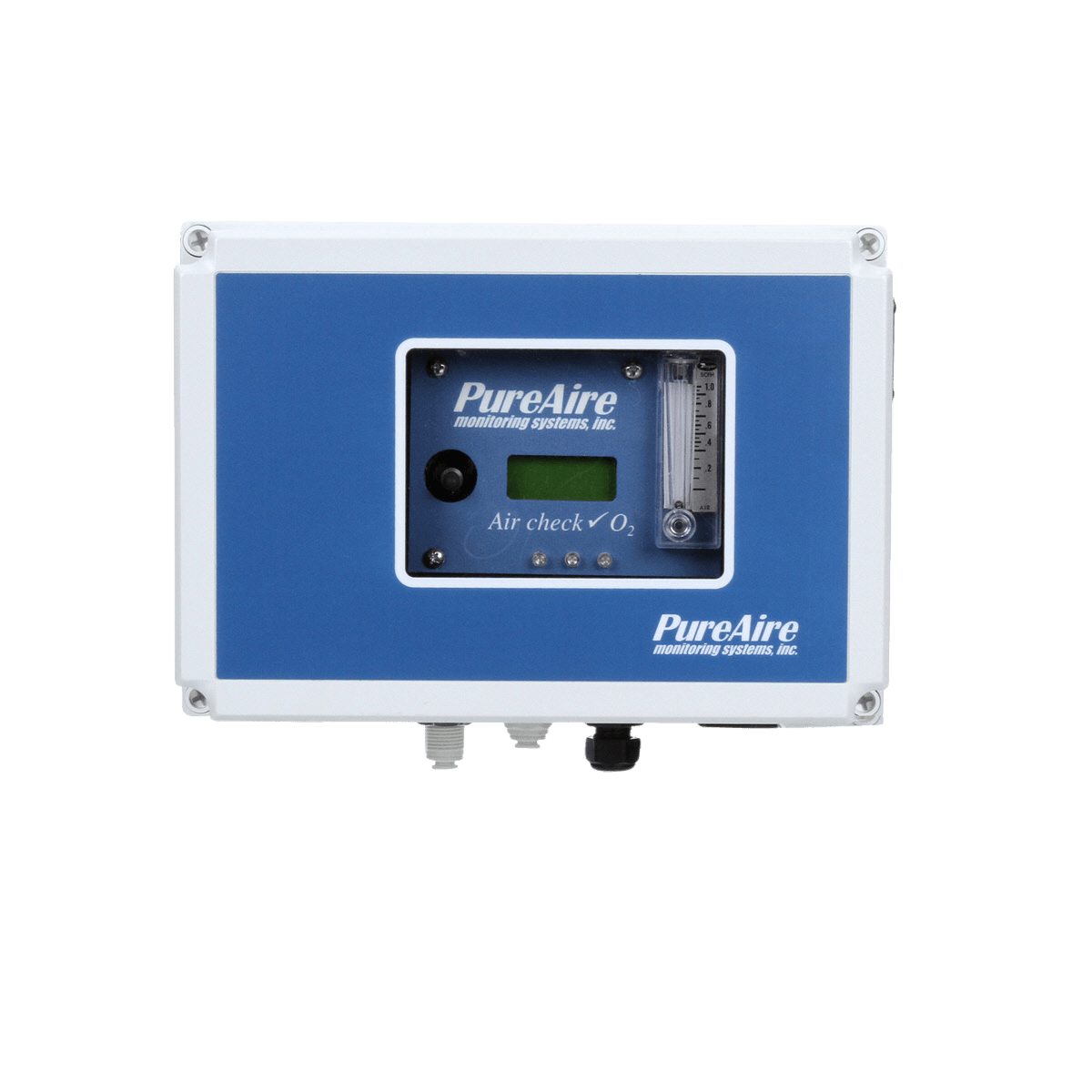
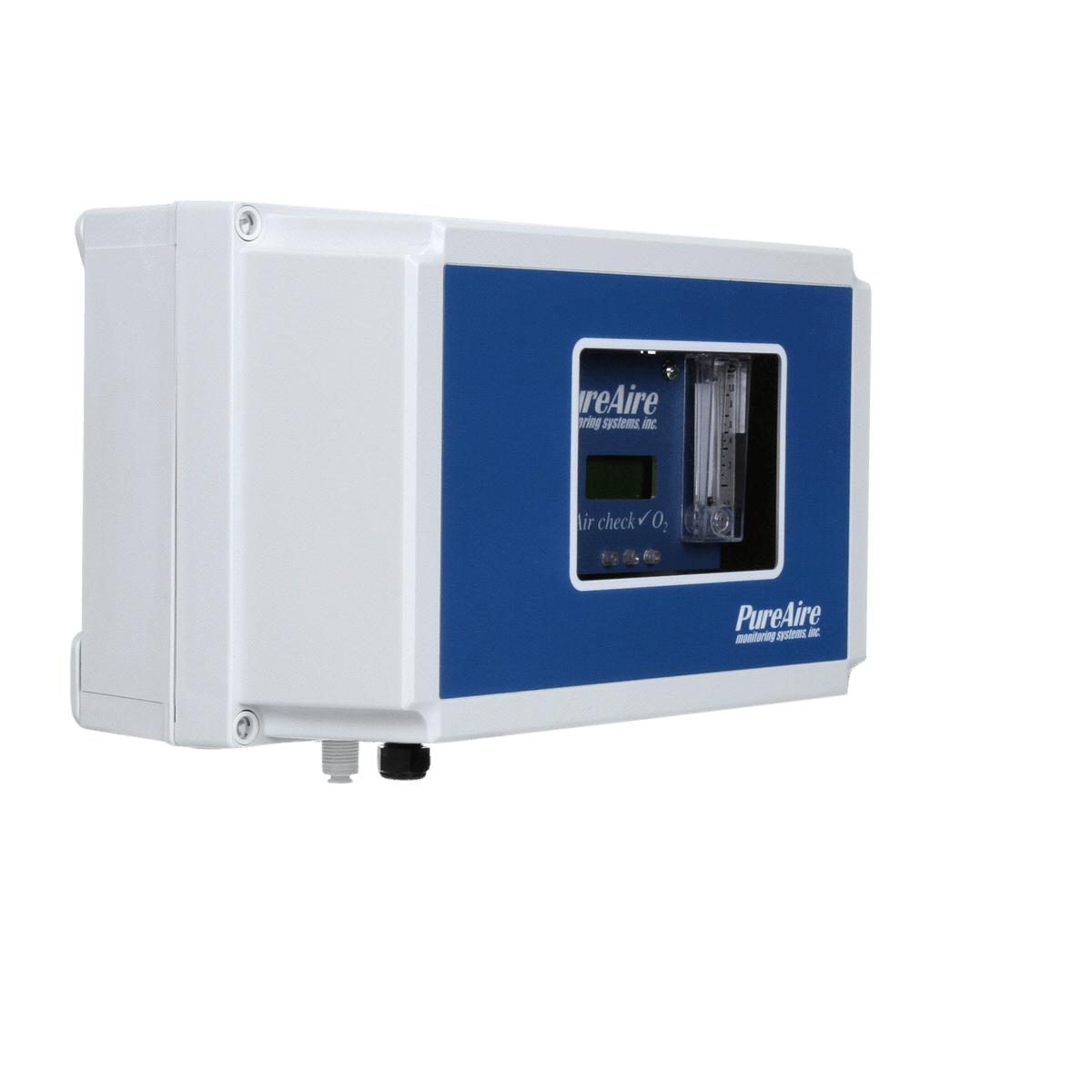
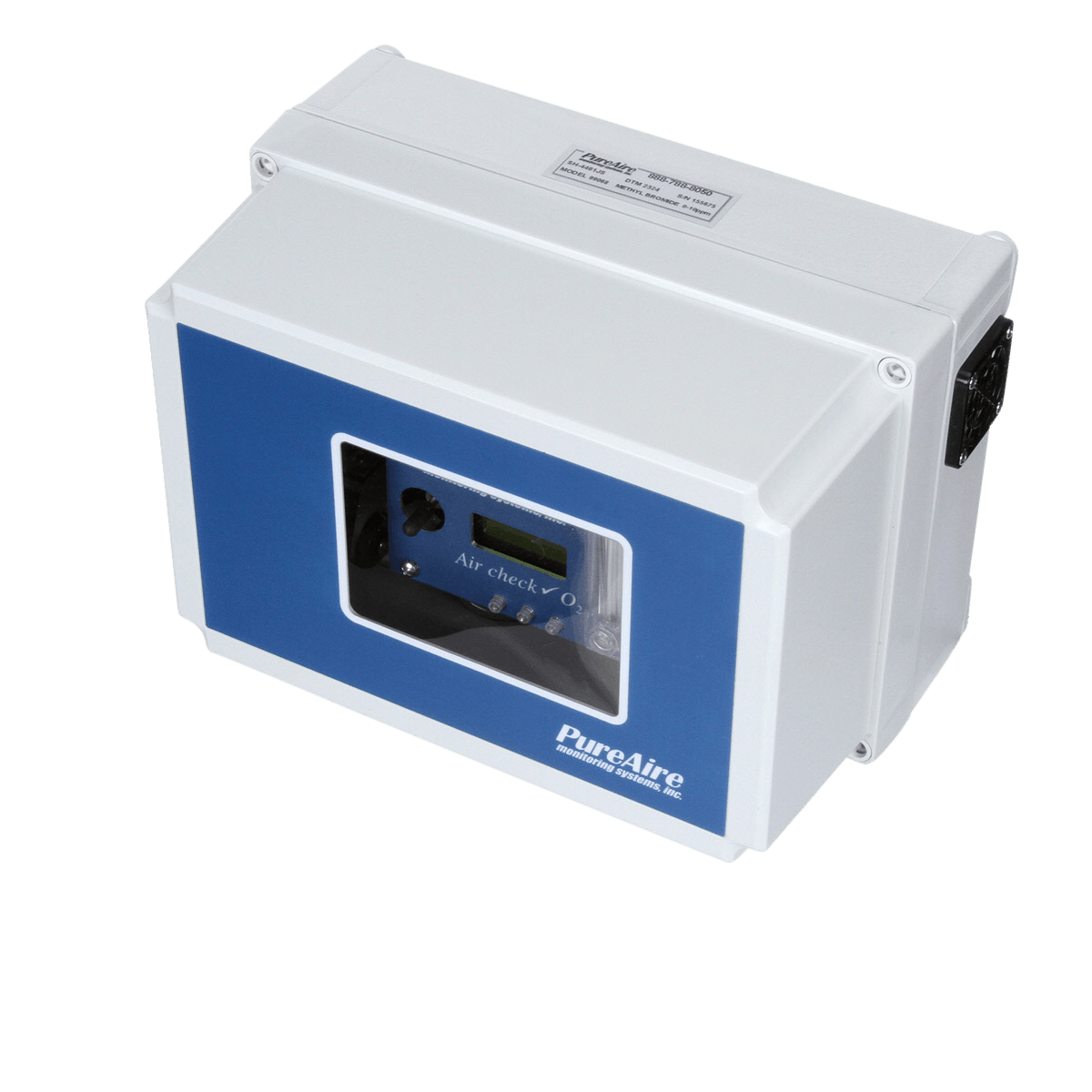
The PureAire Methyl Bromide Gas Monitor is a compact, extractive gas monitoring system that’s ideal for continuously and remotely monitoring gas cabinets, process tools, scrubber systems, and other areas where maintenance access may be limited or undesirable. The Methyl Bromide Gas Monitor features a long-life pyrolizer and sample pump; this reliable hazardous gas detection system significantly reduces the labor and downtime commonly associated with gas detector maintenance and service.

  • Detects Methyl Bromide at TLV Levels
  • Enhanced Self-diagnostic Capability Decreases Downtime and Maintenance Costs
  • “Smart” Sensor Electronics Continuously Checks Sensor and System Status
  • Built-in User Selectable Local Dual Level Alarms with Relay Output
  • Local Digital Display
  • 4-20 mA Analog Output
  • Low-cost Renewable Sensor

The Methyl Bromide Gas Monitor’s instrument “smart” circuitry continuously monitors sensor cell status and sampling system performance. Continuous sensor cell operation is transmitted via 4-20 mA signal to PureAire controllers, PLC’s or remote alarm systems. Should a system error occur, the AirCheck Advantage outputs a 2 mA signal to remote alarm/control systems to immediately alert control room personnel.

The heart of the system is a smart renewable sensor cell linked to a compact pyrolizer. The sample is drawn through the pyrolizer, where Methyl bromide is thermally decomposed and converted into another gas that is more easily detected electrochemically. Unlike competitive Methyl bromide detectors, which measure at the percent LEL levels, the AirCheck Advantage measures at the PPM OSHA TLV levels.

<tr>Sensor Type<td>Renewable electrochemical cell

Sampling Method Extractive Sample Draw
Gases Detected Methyl Bromide (CH3Br)
Range¹ 0 – 20ppm
Accuracy 0.5 ppm
Operating Temperature 32° to 104°F (0° to to 40°C)
Sensor Life 3-6 years under normal conditions
Gas Concentration Indicator Built-in LCD Back-Lit Digital Display – Displays, Gas Name, ppm Concentration, AL1, AL2, System Fault Messages
Signal Outputs 4-20 mA Analog Output (Active)
Alarm Level 1 Yes
Alarm Level 2 Yes
Fault Yes
Sampling Distance² 100 ft/33m
Sample Pump Electromagnetic DC Diaphragm Pump
Power Requirements 2.0 A 24 VDC
Width 10.0 in 254 mm
Height 6.5 in 165.1 mm
Depth 8.05 in 204.5 mm
Weight 10 lb (4.5 kg)
Enclosure Polycarbonate/NEMA 4X
Optional Extras Enclosure: Class 1, Div 1, Group B, C & D Explosion-Proof
Country of Origin USA
Harmonized Tariff Code 8531.10.0045

1 Other ranges available; consult PureAire.

2 Longer sampling lengths are available; consult PureAire.


Additional Gas Monitor Accessories List Price
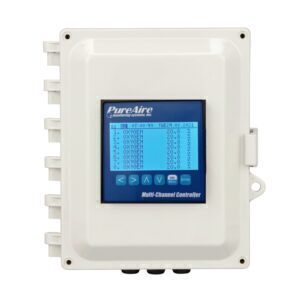
8 Channel Controller US (P/N # 99196)
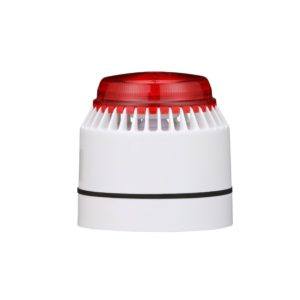
Horn and Strobe  US (P/N # 42002)
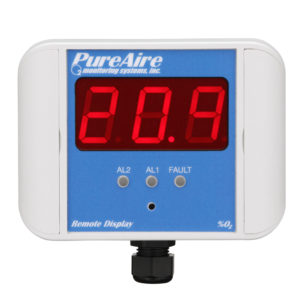
Remote Display US (P/N # 99091)


Low Annual Operation Cost
The PureAire Air Check Advantage has the lowest annual maintenance costs of any gas monitoring system on the market. PureAire’s Renewable Sensor cells are easily recharged with electrolyte right in the field at approximately 20 % of the cost of disposable sensor cell type systems. Recharge costs typically run about $35.00 per sensor every 6 months. Combined with our built-in, low-power pyrolizer, and long-life sample pump, the Air Check Advantage will lower your annual operation costs. When compared to competitive gas monitors, it will pay for itself in just a few years.

Connects to DCS and PLC Controls
The Air Check Advantage transmits continuous gas concentration levels to any distributive control system, programmable logic controller, or PureAire’s proprietary single and multichannel controllers. The monitoring system Monitor can be operated remotely up to 1,000 meters, 0.6 miles from centralized distributive control systems.


Methyl Bromide Product Literature

Air Check Advantage Methyl Bromide Manual 

Fumigation Chamber with Monitor Installation 

Methyl Bromide Comparison to Draeger Tubes 

EPA Compliant Letter 

Quick Start-up Procedure 

EPA DPR Compliant Letter 

Gases We Detect

Remote Digital Display 99091

Horn/Strobe

Horn/Strobe 42002

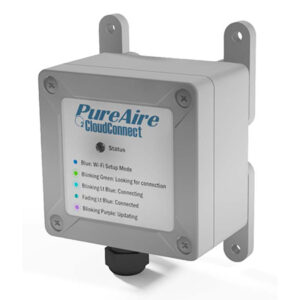
CloudConnect

8-Channel Touch Screen Controller 

Targeted Detection

Configured specifically for Methyl Bromide monitoring to support site safety programs.

Continuous Monitoring

Designed for around-the-clock detection to help identify leaks or unsafe conditions early.

Integration Ready

Built to fit typical facility alarm and monitoring workflows (local alerts and system integration).

Application Flexibility

Suitable for facilities including labs, manufacturing, and gas handling areas.

A toxic gas detector continuously monitors the air for harmful gases, including carbon monoxide, chlorine, ammonia, and hydrogen sulfide. It warns personnel before levels reach dangerous concentrations. Toxic gas detectors protect workers from low-level poisonous gases (in the ppm range) that can cause immediate or long-term health effects.

The most common include:
• Carbon monoxide (CO) – parking garages, boiler rooms
• Hydrogen sulfide (H₂S) – oil & gas, wastewater treatment
• Chlorine (Cl₂) – water treatment, chemical plants
• Ammonia (NH₃) – refrigeration, food processing
• Nitrogen dioxide (NO₂) – vehicle maintenance facilities
• Sulfur dioxide (SO₂) – power plants, refineries
• Ozone (O₃) – semiconductor, pharmaceutical industries
• Refrigerant gases (classified as A1, A2L, B2L, A3) – HVAC systems, supermarkets, cold storage, data centers

• Electrochemical sensors: Accurate, low-level detection; best for most toxic gases (CO, H₂S, Cl₂, NH₃).
• PID (Photoionization Detectors): Detects volatile organic compounds (VOCs) and low-level hydrocarbons.
• NDIR (Non-Dispersive Infrared): Used more often for CO₂ or gases that absorb infrared light. NDIR sensor cells are highly effective for detecting refrigerant gases across classifications A1, A2L, B2L, and A3.

• CO: 0–100 ppm, 0–1,000 ppm
• H₂S: 0–30 ppm, 0–200 ppm
• Cl₂: 0–1 ppm, 0–3 ppm, 0–10 ppm, 0–50 ppm, 0–200 ppm
• NH₃: 0–75 ppm, 0–100 ppm, 0–200 ppm, 0–300 ppm, 0–1,000 ppm
• NO₂: 0–2 ppm, 0–9 ppm, 0–15 ppm, 0–20 ppm
• SO₂: 0–15 ppm, 0–20 ppm
• O₃: 0–0.3 ppm, 0–1 ppm, 0–3 ppm, 0–300 ppm
• Refrigerant gases (A1, A2L, B2L, A3 classifications): 0–500 ppm, 0–1,000 ppm, 0–5,000 ppm

• Oil & gas: H₂S monitoring in drilling and refining
• Water/wastewater treatment: Chlorine and H₂S detection
• Food & beverage: Ammonia refrigeration monitoring
• Laboratories & pharma: VOC and toxic gas detection
• Manufacturing & automotive: CO and NO₂ monitoring
• Power generation: SO₂ monitoring in flue gas areas
• HVAC, supermarkets, cold storage & data centers: Refrigerant leak monitoring (A1, A2L, B2L, A3 gas classifications)

Consider:
• The specific gas hazards in your facility
• Sensor type (electrochemical, PID, NDIR, etc.) based on gas and concentration range
• Installation environment (indoor, outdoor, temperature/humidity conditions)
• Compliance needs (OSHA, IFC, local codes)
• Integration with alarms, PLCs, or cloud monitoring systems like PureAire’s CloudConnect

• Electrochemical sensors: Every 6–12 months
• PID sensors: Every 3–6 months
Always follow the manufacturer’s recommendation and perform bump tests for safety.

• LEL: Percentage of gas concentration at which ignition becomes possible. Combustible detectors typically measure 0–100% LEL.
• PPM (parts per million): A finer measurement, usually used for toxic gases rather than combustibles.

Yes, in most cases. Some gases, such as hydrogen sulfide (H₂S), carbon monoxide (CO), and ammonia (NH₃), pose toxic risks at very low concentrations (ppm levels) and combustible risks at higher concentrations (% LEL).
• A toxic gas detector is needed to protect worker health by alarming at ppm exposure limits set by OSHA and other agencies.
• A combustible gas detector is needed to prevent explosions or fires when gas levels approach the Lower Explosive Limit (LEL).

Since the alarm thresholds and sensor technologies differ, a single detector usually cannot provide both types of protection. Many facilities use both toxic and combustible gas detectors for full coverage, often integrated into a single safety system.  This system can activate building ventilation and advanced warning systems when gas levels reach dangerous concentrations.

If a gas is toxic at low ppm and combustible at higher % LEL, you may need dual detection — one detector set for ppm exposure, another for explosion hazard. Sensor selection depends on whether the primary risk is worker health, explosion, or both.