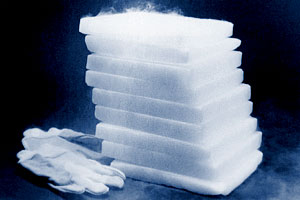
Carbon dioxide, in its solid form, is colder than ice. It is so cold, in fact, that handling it without protection can cause frostbite. It does not melt, but instead dissipates into a gas that can be dangerous to breathe. This substance is called dry ice, and, when handled properly, has many useful applications.
The most practical use of dry ice is to keep things cold. It can be used to flash freeze anything from biological samples to ice cream. It does not alter the taste of food, but alternatively keeps the fats in food from becoming rancid and preserves flavor over time. When transporting perishable items, even medications, dry ice can be used to insure freshness. With safety precautions, it can be used to ship food in packages, and even be brought on an airplane.
Another common use of dry ice is to create ‘fog’. This can be done for a special effect in a movie, or even in a haunted house or nightclub. When a piece of dry ice is placed in water, sublimation is accelerated. This is the process from which a chemical in a solid state skips over the liquid stage and turns directly into a gas. For dry ice, this process occurs more rapidly in water, allowing a dense cloud of fog to dramatically fill a room. Since carbon dioxide is heavier than air, the fog will stay low to the ground, providing an eerie special effect.
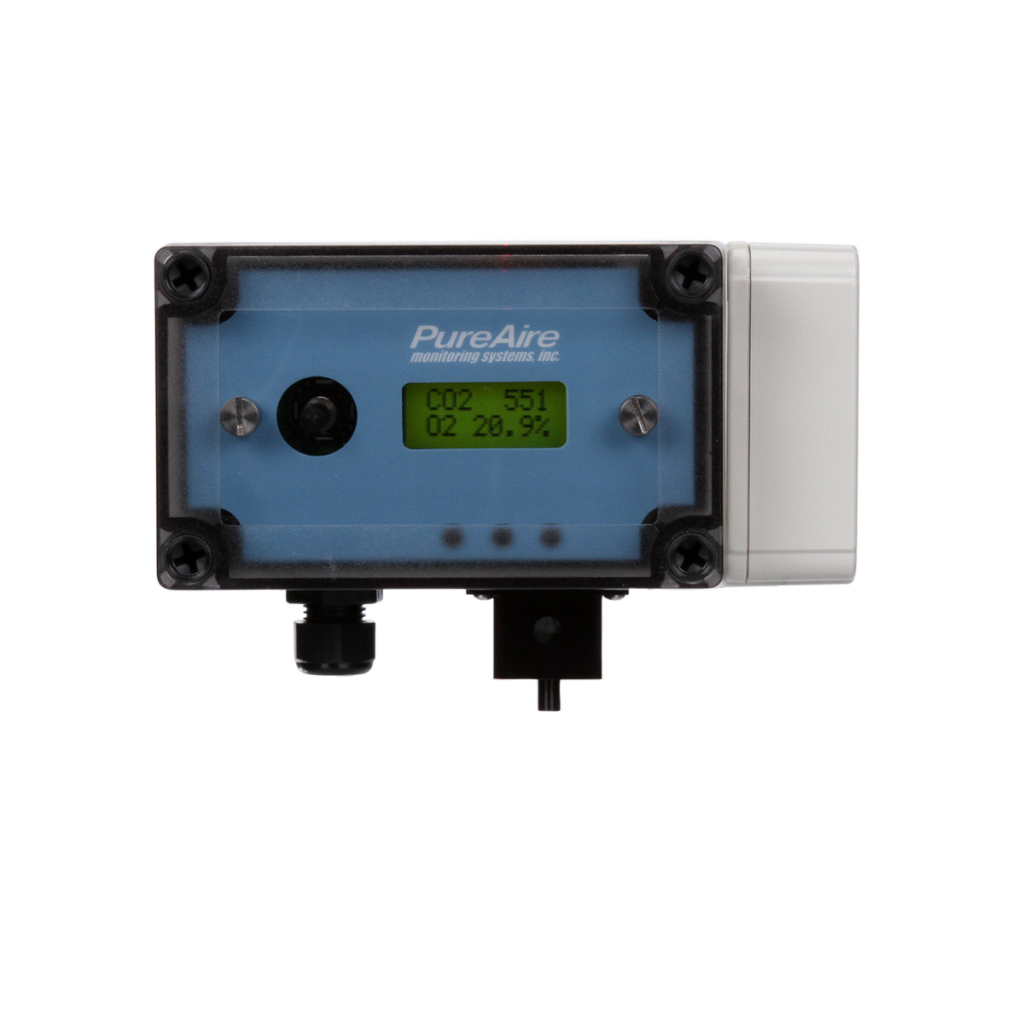
Dual O2/CO2 Monitor for Dry Ice
Dry ice may sound enticing, and can even be obtained from your local grocery store, however, it is important to remember to follow safety precautions before and during the handling of this powerful substance. The first thing to consider is how you are going to transport and store the dry ice. It is very important to wear protective gloves while picking up dry ice. It is so cold than it can cause frostbite upon contact. If you will be driving with a large quantity of dry ice, make sure to have your windows down to allow a flow of air so carbon dioxide does not build up inside your car. Also, store dry ice in a cooler so it lasts longer, but make sure it is not airtight so it does not explode under pressure from the sublimation.
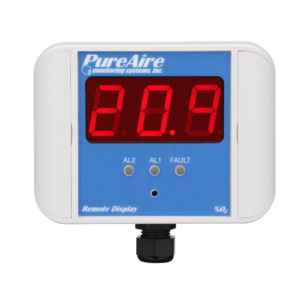
As dry ice sublimates and creates ‘fog’, it is slowly filling the room with carbon dioxide. This is not a gas you want to breathe in large quantities. It can replace the oxygen in a room, causing illness and suffocation, so it is very important to have good ventilation in any area in which you are storing or using dry ice. Since carbon dioxide is colorless and odorless, it can be easy not to realize you are having a ventilation problem till it is too late. The absolute safest way to use dry ice is with the use of an oxygen and CO2 monitor.
An Dual Oxygen and CO2 Monitor tests the air in the room to make sure it is safe to breathe. PureAire Monitoring Systems makes an oxygen monitor for just this purpose, and with its 10+ year sensor, it is a smart choice to purchase if you are regularly using dry ice. Chemicals can be useful, and even necessary, to get a job done. It is important to use them safely and correctly to prevent injury, and even death. If the oxygen meter alarm goes off, you are able to evacuate the area before any long term ill effects take place. When using dry ice, remember to have fun, but first and foremost, say safe.