

Pepsi Is Launching the First Ever “Nitro Soda”
- By : PureAire Monitoring Systems
- Posted on : February 11, 2019
- News Room

Nitrogen-infused or nitro beverages have been among the biggest trends in the beverage industry. There’s been no shortage of nitro cold brew coffees and nitro beers, but never a nitro soda—until now, with the launch of Nitro Pepsi. The new beverage was sampled at the 2019 Super Bowl and while you won’t find it on tap just yet, here’s what you can look forward to.
Introducing Nitro Pepsi
Nitro Pepsi aims to revolutionize the most signature aspect of soda, which is the carbonation.
CO2 gas is responsible for creating the tangy bubbles that give soda its texture and mouthfeel. Nitrogen creates bubbles that are smaller and softer, for a creamier mouthfeel in the drink. The creamy experience naturally complements sweet, malty beer styles like stouts and porters, as well as cold brew coffees.
Translated into Pepsi, the nitrogen bubbles create a beverage that’s reminiscent of an ice cream float (with that creamy sweetness). The drink will be available in two flavors, original Pepsi and vanilla. Pepsi recommends drinking the Nitro Pepsi cold, but not over ice.
With its new nitro soda, Pepsi hopes to transform the soda drinking experience, much the way that craft beer and coffee have been transformed by nitro drinks, and introduce their brand to a new audience of consumers.
While there’s a lot of excitement around the new beverage, there are also some risks to consider, due to the use of nitrogen gas. Nitrogen is naturally dense and will displace oxygen in the environment. If the bottling plant experiences a nitrogen leak, this means that oxygen within the bottling plant will be pushed out of the air, creating a public health hazard.
Nitrogen gas is colorless and odorless, so employees would not be able to spot the leak. When oxygen levels first begin falling, employees will not notice any symptoms. By the time oxygen levels dip to the point where health is at risk, employees may begin to experience cognitive confusion or suffer respiratory distress. With oxygen deprivation, there’s a risk of losing consciousness or suffering death via asphyxiation.
Preventing Nitrogen Leaks With a Dual O2/CO2 Monitor 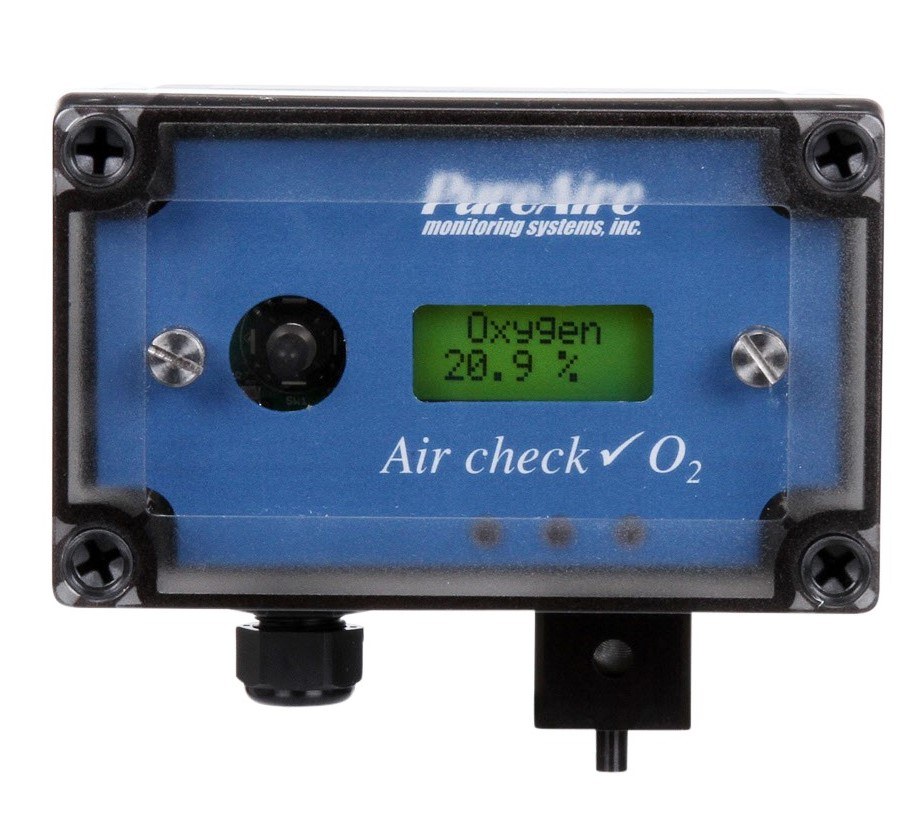
While the nitrogen leak cannot be detected, what can be tracked is the level of oxygen in the room. By paying attention to oxygen levels and alerting employees when levels fall below the safe threshold, as defined by OSHA, a dual O2/CO2 monitor protects public health. Not only are these alarms required by OSHA where inert gases like nitrogen are used, they are the easiest way to protect employees from workplace hazards and deliver peace of mind in the plant bottling area.
The O2 monitor works by sampling the air to check oxygen levels. As long as oxygen levels are within the safe zone, the monitor is silent. With PureAire products, the monitor always displays readouts on a screen, so employees can check oxygen levels at a glance.
If a nitrogen leak develops and oxygen starts to fall, the monitor will flash lights and sound an alarm so that employees have ample warning to evacuate the area. Plant workers can then alert emergency services, who can respond to the leak.
There are many O2 monitors on the market, but PureAire’s are unique for their construction. PureAire O2 monitors and dual O2/CO2 monitors feature zirconium sensors, which offer 10 or more years of reliable performance with no calibration. PureAire monitors do not need calibration or maintenance. All that’s needed is to unbox the monitor, mount it on the wall, and plug it in to enjoy continuous oxygen monitoring and superior leak detection.
PureAire’s O2 monitors are industry leading for their quality, construction, and performance. To learn more about PureAire’s dual O2/CO2 monitor or oxygen monitor, visit www.pureairemonitoring.com.