Discontinued. Not for sale. Recommended: MPS Flammable Gas Monitor

View replacement

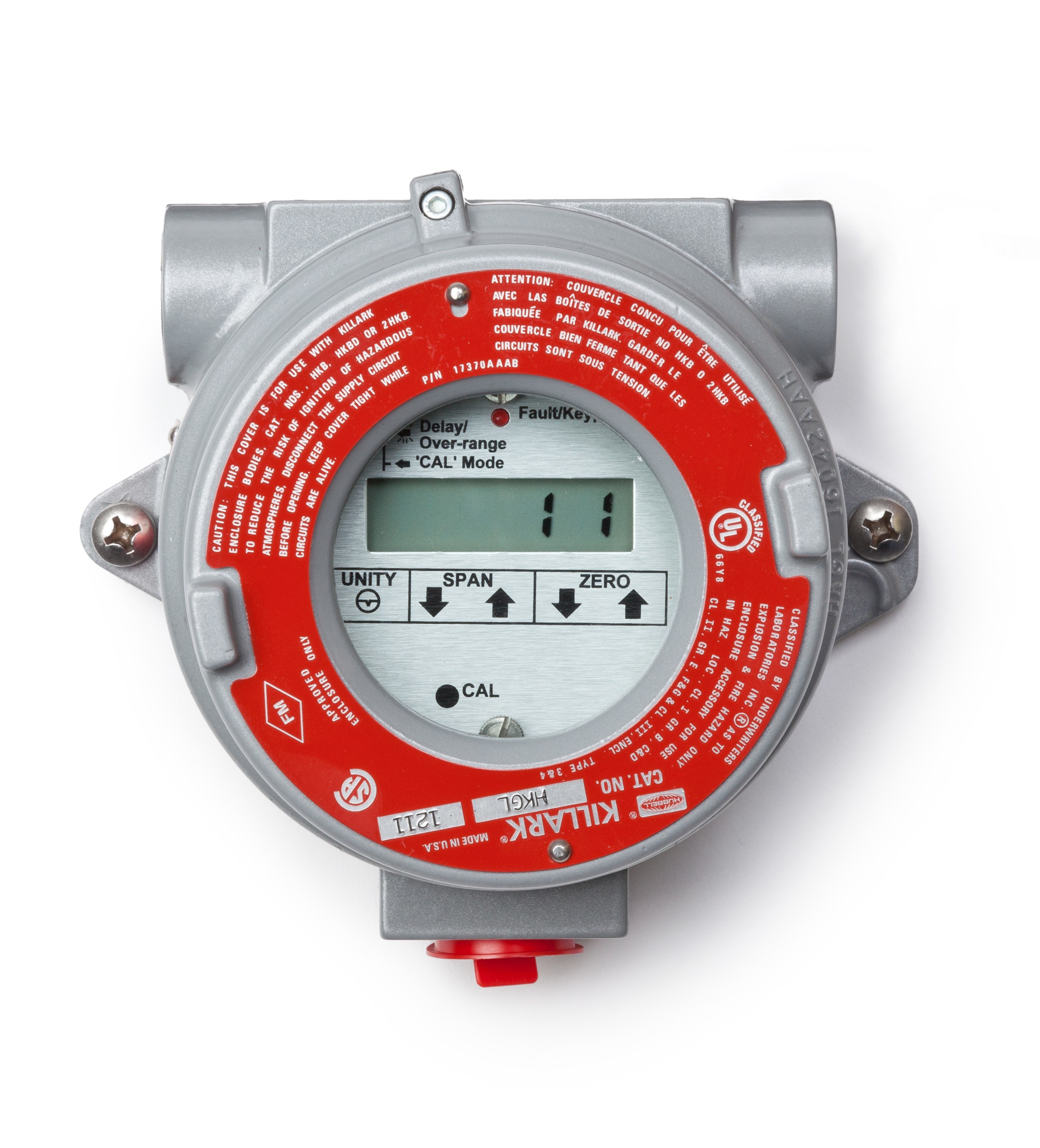
ST-46 Combustible Gas Detector with LEL Sensor, 0-100%

Item : ST-46 | Discontinued

Product Summary

Combustible gas detectors are used in workplaces that use combustible gas in order to secure worker safety, detect the location of any leakage, and measure gas concentrations. The enclosure is specifically designed to prevent an explosion. The monitor is well-suited for environments such as power plants, refineries, natural gas locations, the oil and gas industry, and anywhere combustible, toxic gases are present. The monitor is housed in a NEMA 4 explosion-proof enclosure suitable for Class 1, Group B, C, and D, Class 2, Group E, F, and G. PureAire’s durable, long-life LEL catalytic sensor will last 4-5 years in a normal environment without needing to be replaced.

*This product has been discontinued. Please follow the link below to view the replacement model:

MPS Flammable Gas Monitor 

Please contact PureAire at (847)726-6000 if you have any questions or need assistance. 


  • LEL Combustible Gas Monitor with 0-100% Range
  • Non-Intrusive One-man Calibration
  • Ex Proof Enclosure
  • Designed for Combustible Gases
  • Local Digital Display
  • 4-20 mA Analog Output
  • Long Life LEL Catalytic Sensor

The instrument’s fault supervision circuitry continuously monitors for failed sensor cell and communication line breaks. Plus sensor cell operation is continuously supervised 24/7 and when used in conjunction with distributive control systems or PLCs, provides immediate fault identification for a disconnected sensor cell.

The AirCheck LEL gas detector is housed in a NEMA 4 explosion-proof enclosure and is available for Ethanol, hydrogen, natural gas, methane, and more. Capable of monitoring the % LEL combustible gases, the AirCheck Ex is a perfect monitoring solution for providing worker protection in chemical plants, refineries, and other areas requiring hazardous classifications.

Sampling Method Diffusion Cell
Gases Detected 1 Ethanol (C₂H₆O)
Ethane (C2H6)
Ethyl Alcohol (C2H5OH)
Ethylene (C2H4)
Isopropyl alcohol (IPA)
Methane (CH4)
Methyl Alcohol (MeOH)
Xylene ((C6H4(CH3)2)
Accuracy ± 1 % of Reading
Operating Temperature -32 to +50 ºC
-25 to +122 ºF
Display 3 1/2″ Digit LCD Digital Display
Sensor Type LEL Catalytic Bead
Sensor Life 2 to 5 years under Normal Conditions
Signal Outputs 2 alarm relays, 4-20 mA analog output, and fault relay
Power Requirements 2 24 VDC
3 Wire
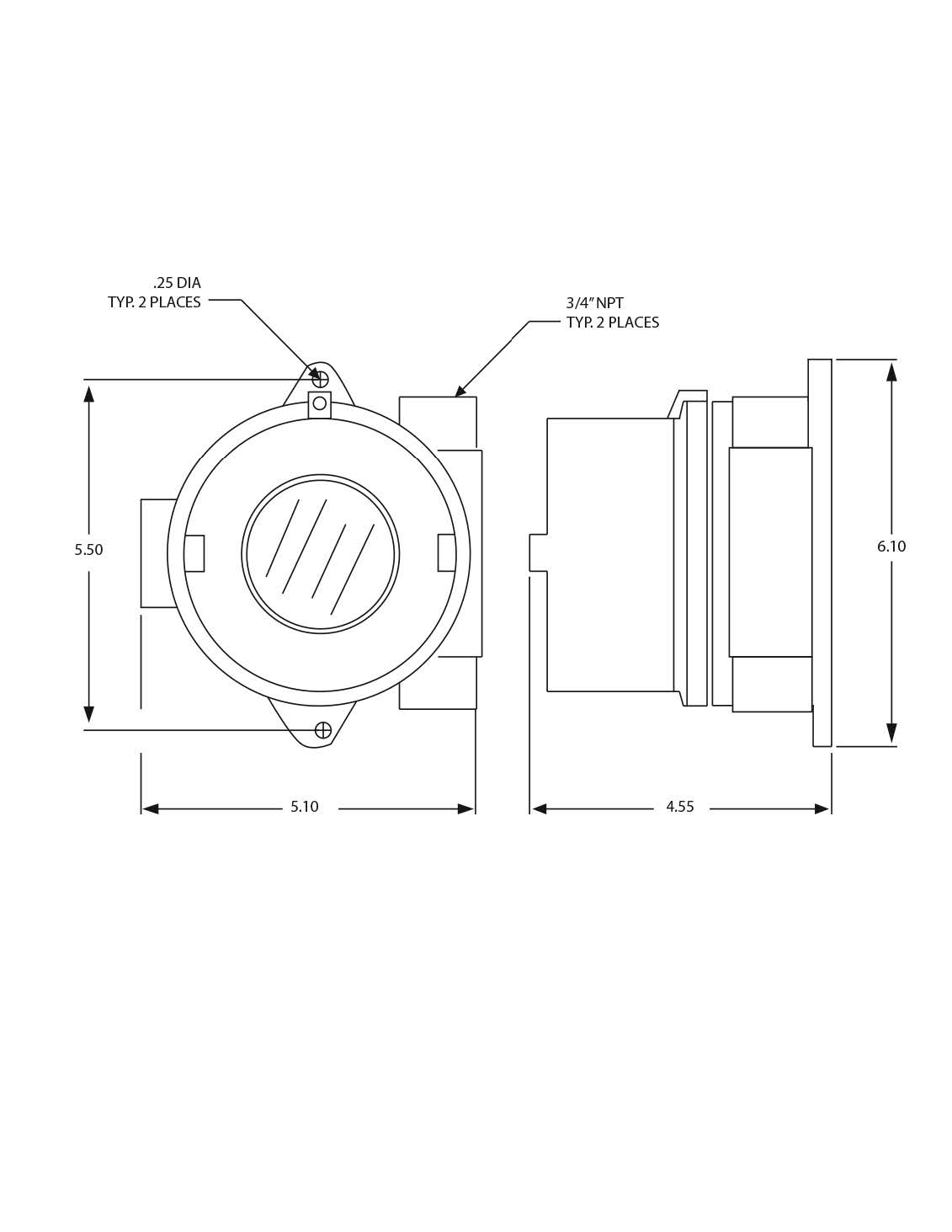
Width 6.5 in
165.1 mm
Height 5.0 in
127 mm
Depth 7.0 in
177.8 mm
Weight 4.0 lb
1.8 kg
Enclosure Nema 4 Explosion Proof Suitable for Class 1, Group B, C, & D
Country of Origin USA
Harmonized Tariff Code 8531.10.0045

1 Contact PureAire for more gases
2 48 V DC, 3 Wire Available for LEL and Hydrocarbon Gases.

Additional LEL Monitor Accessories List Price
8 Channel Controller  US (P/N # 99058)
Horn and Strobe  US (P/N # 42002)
Remote Display US (P/N # 99091)

Self-Supervised Operation
The PureAire Air check Ex incorporates sophisticated electronics that, when used in conjunction with distributive control systems or PLCs enable you to quickly identify and correct major system faults. These enhanced self-diagnostic capabilities include missing cell and broken transmitter wiring. Should a system error occur, the AirCheck Ex outputs a 0 mA signal to remote alarm/control systems to immediately alert control room personnel.


ST-46 EX-LEL Combustible Gas Monitor Literature

ST-46  EX-LEL Combustible Gas Monitor Manual  

How to Connect a Horn and Strobe to an LEL Monitor

LEL Combustibles Layout 

LEL Monitor Layout 

LEL Monitor with Fan Relay

 Gases Detected with PureAire Monitors

Oxygen deprivation is a silent killer. Oxygen-depleting gases, such as nitrogen, argon, and helium, are odorless and colorless, making leaks impossible to detect, unless appropriate monitoring is in place.

PureAire oxygen deficiency monitors can be used to monitor nitrogen, argon, and helium. Carbon dioxide can also be monitored with PureAire’s dual oxygen/carbon dioxide monitor.

PureAire uses a proprietary, non-depleting, zirconium oxide sensor that will last up to 10 years in a normal environment without needing to be replaced.

PureAire’s sensors do not operate under partial pressure, meaning that a PureAire sensor will not need to be adjusted to account for different elevations. Additionally, the sensors will not drift due to changes in barometric pressure.

In contrast, other gas detection companies use depleting, electrochemical sensors. These sensors, because they are depleting, operate for 1-2 years before needing to be replaced. Electrochemical sensors do not offer long-term solutions to companies committed to safety.

PureAire sensors are built to last 10 years. Often, the sensors work much longer. In fact, some of our first customers who started using PureAire products in 1997 report that the sensors are still in operation today.

On the other hand, an oxygen monitor that uses a depleting, electrochemical sensor is like a battery in that, as the sensor depletes, it begins to lose its power and responsiveness. In order to operate accurately, electrochemical sensors must be calibrated frequently.

PureAire sensors are made of non-depleting zirconium oxide, and calibration is typically not required.

However, a visual check of the monitor should be done once a year to verify that the sensor is functioning properly, and span adjustments should be done, as necessary. The sensor requires periodic testing with nitrogen to verify the sensor’s response to low oxygen levels.

In contrast, electrochemical sensors, because they deplete over time, will need to be calibrated every 2-3 months and totally replaced every 1-2 years.

Switching to a PureAire non-depleting, zirconium oxide sensor will save you time and money, while ensuring the safety of your workers and facility.

Electrochemical sensors offered by other gas detection companies lose accuracy over time and must be calibrated. Calibration recharges and resets the monitor to get an accurate reading. It is important to note that an electrochemical sensor can only be calibrated a finite number of times before it must be discarded.

PureAire’s non-depleting zirconium oxide sensor will not experience drift. Oxygen sensors from PureAire will provide long-lasting, reliable, and accurate monitoring for an average of10+ years.

The oxygen monitor covers an area of approximately 692 square feet when mounted on a wall and should be placed no more than 21 feet from potential leak sources such as gas lines, gas cylinders, or any areas where a gas leak might be expected to occur.

To ensure safety, the maximum distance between two monitors mounted to the same wall, should not exceed 30 feet. However, since cryogenic gases, such as argon, helium, and nitrogen, are unpredictable, we encourage you to contact PureAire for additional guidance specific to your needs.

In most circumstances, PureAire recommends that oxygen monitors be installed 3-5 feet away from gas cylinders or cryogenic gas lines. To enable employees to see the monitor display and verify its performance, PureAire recommends mounting an oxygen monitor 3-5 feet off the ground.

There are other options for mounting an oxygen monitor. For instance, PureAire sensors can sample the air from up to 100 feet away, or be installed within a glovebox, freezer, sealed chamber, or even underground. PureAire monitors can also work in environments that require KF-25 flanges, as well as in nitrogen/argon enriched environments.

PureAire’s Sample Draw Monitors pull a sample flow at a rate of 250 ccs per minute. We recommend using 1/4” OD x 3/16” ID polypropylene sample tubing. Using this internal tubing dimension, to calculate transport (response) time, add 2 seconds per foot of sample tubing. For example, if the sample tube is 10 feet long, the initial response time would be 20 seconds (10ft x 2seconds=20seconds) at 15 feet the response time would be 30 seconds (15ft x 2seconds=30seconds), etc.

The response time when using the entire 100 feet of sample tube will take 3.5 minutes (100ft x 2seconds=200seconds or 3.5minutes) for the sample to reach the monitor.